

Years before founding Walmart, Walton learned how lower prices and higher volume could transform a retail business.
BY MOSES JEANFRANCOIS, NEWS WRITER @MOSESJEANS
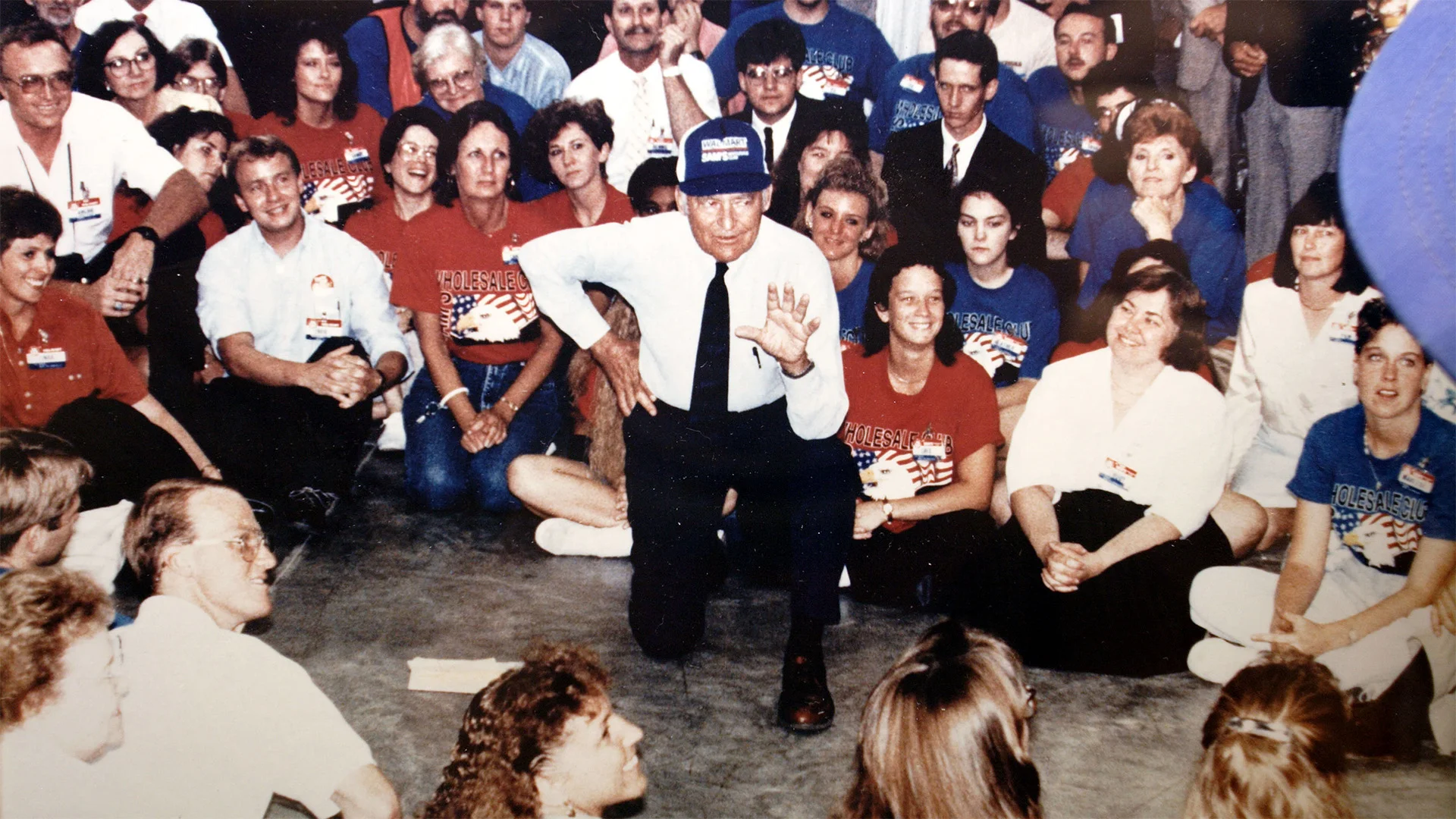
Wal-Mart founder Sam Walton speaking to employees. Photo: Getty Images
Listen to this ArticleMore info
0:00 / 0:00
Before creating his own empire, Walmart’s founder helped build a different business.
At age 26, Sam Walton started working as a manager at a variety store. The Oklahoma native grew up during the Great Depression and followed his family’s work ethic by taking on side gigs, including selling milk, delivering newspapers, and waiting tables in exchange for food.
“I didn’t start as a banker or as an investor or doing anything else than waiting on customers,” Walton wrote in his employee magazine Wal-mart World. “Many people who run big companies never ring cash registers, nor do they wait on customers, and so I’ve always appreciated what it meant to be a salesclerk and how much a salesperson can influence a customer in a business relationship.”
In 1940, Walton graduated with a bachelor’s degree in economics from the University of Missouri. Three days later, he joined JCPenney as a management trainee. His 18 months at the retailer would prepare him for his entrepreneurial ventures after leaving the military.

Refreshed leadership advice from CEO Stephanie Mehta
Featured Video
An Inc.com Featured Presentation
In 1945, with a $20,000 loan from his father-in-law and $5,000 in savings, Walton purchased a Ben Franklin variety store. The chain was well-established around the country, selling arts and crafts supplies and general merchandise. Walton, as a franchisee, found a way to make the store his own.
Looking to gain an edge over the competition, Walton would highly sought-after products from local distributors. He would then price them significantly cheaper than nearby stores, giving him a competitive advantage.
“Here’s the simple lesson we learned….By cutting your price, you can boost your sales to a point where you earn far more at the lower retail price than you would have by selling the item at the higher price. In retailer language, you can lower your markup but earn more because of the increased volume,” Walton said in his 1992 autobiography, Sam Walton: Made in America.
According to the Encyclopedia of Arkansas, Walton quickly increased the annual sales of his first-ever store in Newport from $80,000 to $225,000 in three years. Despite its success, the building’s landlord refused to renew Walton’s lease, forcing him to find a new location.
In 1950, the entrepreneur moved to Bentonville, Arkansas, and opened another Ben Franklin store. He renamed it to Walton’s 5 & 10. Walton began incorporating the then-modern self-service store concept, in which the clerks did not bring goods to the customer. Instead, customers brought their selections to a clerk for purchase.
Looking to help serve his community with discounted products and marketing, Walton continued expanding to roughly 16 stores across Arkansas by 1960. He tried to attract large numbers of customers through low prices.
When Walton asked Ben Franklin to cut its margins by 50 percent to support his discount strategy, the franchisor declined. Instead, Walton moved forward with his own independent discount chain, opening the first Wal-Mart in 1962.
“What we guard against around here is people saying, ‘Let’s think about it.’ We make a decision. Then we act on it,” Walton wrote in his book.
By 1970, Walton and his brother owned 18 Walmart stores. By 1990, there were 1,573 stores, and annual sales were $25.8 billion. It eventually became the nation’s largest retailer.
Walmart now has more than 11,000 locations globally and generates more than $700 billion in annual revenue.
Get Inc.’s free CPG newsletter, Packaged Goods, for the latest on the founders, investors, and trends reshaping consumer brands.



