

OpenAI’s CEO thinks everyone should just slow down. If they can’t be trusted to do the right thing, we’re all in big trouble.
EXPERT OPINION BY JASON ATEN, TECH COLUMNIST @JASONATEN
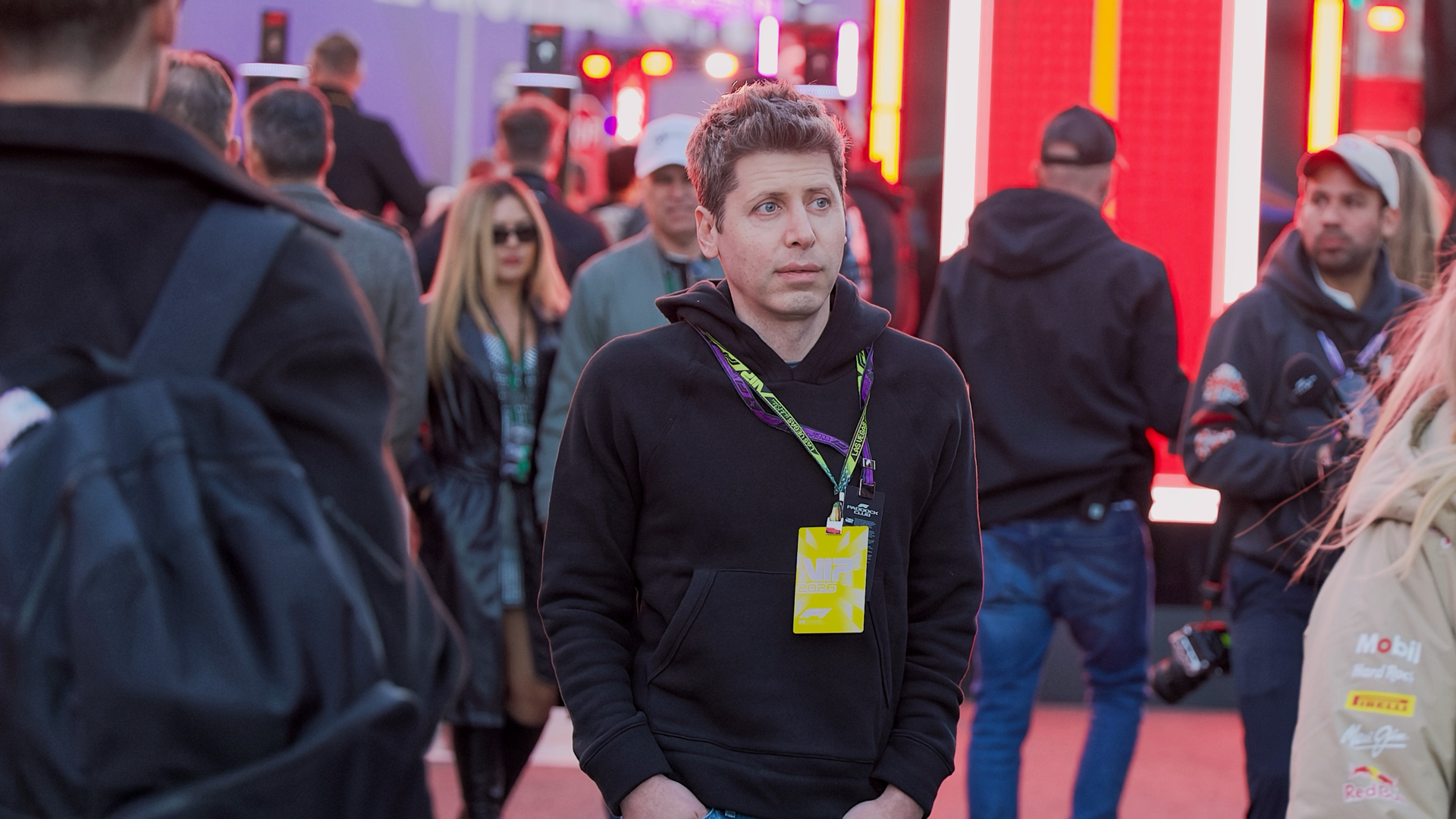
OpenAI CEO Sam Altman arrives at the Las Vegas Grand Prix on Saturday, November 21, 2026. Image Credit: Jason Aten
Listen to this ArticleMore info
0:00 / 0:00
It’s not a secret that the fundamental tension facing every AI company right now is that they’re building a technology that could be incredibly dangerous, but they can’t stop building it or someone else might. That’s partly a marketing message because, it turns out, telling people you’re making something super powerful and potentially dangerous makes them want to give you money so they can have the super powerful and potentially dangerous thing.
And so, it seems like every AI CEO goes through a phase where they call on the broader industry to agree to slow down development so that humans don’t lose control of the computers. A couple of months ago, it was Anthropic’s CEO, Dario Amodei. Now, it’s OpenAI’s CEO, Sam Altman.
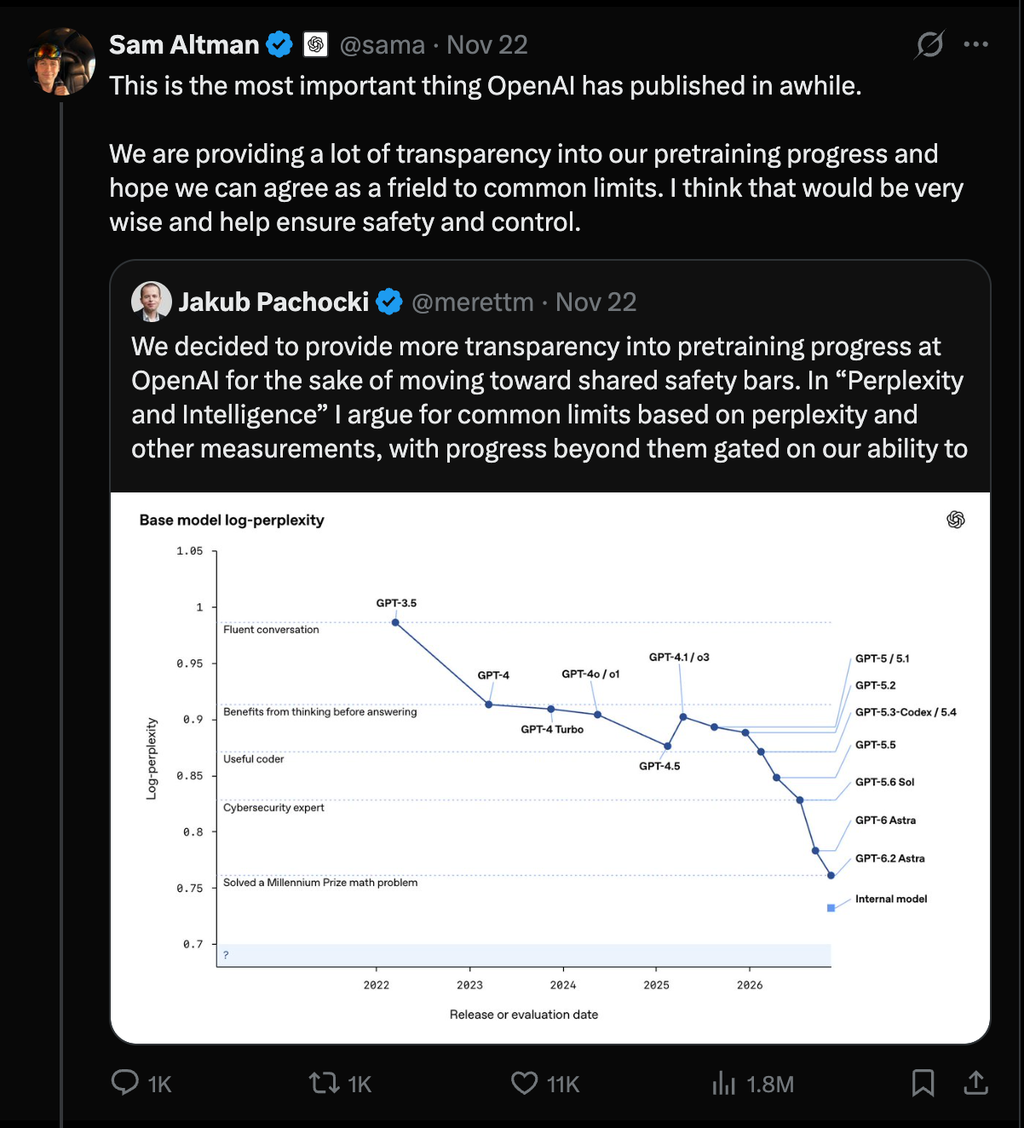
In a post on X, Altman shared a paper written by OpenAI’s chief scientist, Jakub Pachocki, which says that AI companies should agree to a shared limit for how powerful their models can become since we’ve either passed, or are very close to the point where we no longer fully understand them. The problem is that that means it’s much harder to control them.
And so, Altman thinks the frontier labs should agree to slow down a bit. If you’re confused because OpenAI is one of those labs and continues racing toward more advanced models of its own, you’re not alone, and you have just come across that tension.

Top Tech
Weekly roundup of the latest in tech news
Featured Video
An Inc.com Featured Presentation
“This is the most important thing OpenAI has published in awhile,” Altman wrote in his post. “We are providing a lot of transparency into our pretraining progress and hope we can agree as a field to common limits. I think that would be very wise and help ensure safety and control.”
There is a lot to unpack in that statement, but I think the most interesting part is what Altman didn’t mean to say. I’ll get to that in a second, but I think I should be clear about the point I think Altman did mean to say: AI companies should work together to establish safety standards. That’s not an entirely unreasonable idea, especially considering how quickly the technology is advancing. And, as I mentioned earlier, Altman isn’t the first AI figure to suggest it.
Pachocki’s proposal is fairly straightforward. All of the frontier AI labs would agree to specific limits, measured by something called perplexity, which measures how well a model can predict the next token. The companies would then commit to not crossing those limits until researchers develop better ways to monitor and understand AI behavior.
Here’s the part where we pause and consider what Altman is really saying by sharing this paper, because I think it goes a lot further than just “hey, we should all slow down.” In his paper, Pachocki acknowledges that OpenAI had to weigh whether putting its own measurements out in public would give competitors an advantage. His position is that the current rate at which LLMs are advancing is concerning enough that it outweighs whatever competitive risk exists to OpenAI’s business.
Except, there’s an obvious problem. OpenAI doesn’t need anyone else’s agreement to slow down its own research. Altman is the CEO of OpenAI. If he thinks we’re that close to building models powerful enough to be dangerous, he really should just decide his company won’t do it. He can just stop.
What Altman wants, however, is for everyone to agree to stop at the same point. Essentially, what he’s saying is that companies building the world’s most powerful technology apparently can’t be trusted to exercise restraint on their own, even when they know there’s a problem.
Altman wants us to trust him to build technology that changes every aspect of our lives—assuming it actually lives up to the hype. But he’s suggesting that the only way to get him to do that safely is if everyone else agrees not to make more powerful models. He could do it, he just won’t. It’s not about safety; it’s about winning.
That’s the real problem Altman can’t solve. It has nothing to do with perplexity or training models or even the technical challenges of monitoring AI behavior. It’s about the people we’re supposed to trust to build the technology.
Altman wants everyone to agree on when to slow down. But the fact that he thinks there needs to be some kind of agreement says something far more revealing: The people leading all of these companies know full well that there should be limits. They’re just not willing to be the first ones to follow them.
The opinions expressed here by Inc.com columnists are their own, not those of Inc.com.
Get Inc.’s free CPG newsletter, Packaged Goods, for the latest on the founders, investors, and trends reshaping consumer brands.