

Have you ever wondered how today’s top writers manage to edit incredibly long articles, catch every tiny mistake, and polish their clarity so quickly?
If you’ve noticed that your own writing tasks feel a bit easier and faster lately, you aren’t imagining things. We are living through a quiet, massive shift happening right behind the scenes of our everyday emails, blog posts, and comprehensive reports. The secret ingredient driving this massive change is artificial intelligence (AI).
But let’s get one thing clear right out of the gate: AI isn’t here to replace human creativity. Instead, it has evolved into a highly practical, friendly digital assistant.
If you’ve been reading our work for a while, you already know that building a sustainable content strategy relies heavily on authentic human connection.
Content creation will always be about people sharing ideas, experiences, and information with other people. Today, AI simply supports that deeply human process by handling the heavy lifting of organization, grammar, and readability. It clears the brush out of your path so you can focus entirely on what you actually want to say.
Let’s dive deep and explore how you can build a modern, high-performance editing workflow that uses AI not as a crutch, but as a cognitive partner to communicate your ideas better than ever before.

For a long time, writing tools were basically just digital red pens. You remember them—they pointed out misspelled words, yelled at you for using the passive voice, and stopped right there. Then we have paraphrasers to find the better structure of the sentence or paragraph.
Now, AI works as a true partner during every single stage of the writing process.
Think about the reality of drafting an article. When you sit down to write, you are juggling a dozen small, complex tasks all at once.
You are desperately trying to remember your main thesis, build a compelling sentence structure, maintain an engaging rhythm, and ensure the message actually makes sense to a complete outsider.
Simply, it is cognitive overload.
AI tools help complete these secondary tasks with incredible speed and accuracy. Instead of reading the same clunky paragraph ten times to find the right transition word, your digital assistant can review the sentence instantly and suggest a clearer path forward.
Technology is nothing. What’s important is that you have a faith in people, that they’re basically good and smart, and if you give them tools, they’ll do wonderful things with them.
Steve Jobs
What Does a Cognitive Partner Actually Look Like?
A cognitive partner doesn’t just fix your typos; it stress-tests your logic.
Imagine you are writing a persuasive essay on a new industry trend. In the past, you’d send it to a colleague and wait three days for feedback.
Today, you can drop that draft into a Large Language Model (LLM) and give it a prompt like: “Act as a skeptical industry expert. Read my draft and point out the weakest parts of my argument. What questions will my readers still have after reading this?”
That is no longer spellcheck. That is high-level editorial collaboration available to you 24/7. It allows you to step out of the weeds of your own writing and see your content through the eyes of your audience.
To get the absolute most out of these tools, you need to use them strategically.
Editing with AI is about much more than just clicking “accept” on a grammar check or letting a tool auto-complete your sentences. You need a system.
Prompting for Tone and Brand Consistency
One of the hardest parts of writing a long piece of content is keeping your voice consistent. Consistency is exactly what keeps a reader comfortable and engaged. If your article starts off with a warm, friendly tone, but suddenly turns cold, corporate, and academic in the middle, the reader will feel a jarring disconnect. They might even bounce from the page.
AI tools are brilliant at identifying these subtle differences in tone, provided you give them the right instructions. You can use them to review your rough draft and suggest wording that brings everything back to that natural, simple, and friendly style you originally intended.
Actionable Tip: The “Tone Bank” Prompt
Don’t just ask the AI to “make this sound better.” That leads to generic, robotic output.
Instead, create a tone bank. Feed the AI 3-5 of your best, most successful past articles and use a prompt like this:
“Analyze the tone, vocabulary, sentence length, and pacing of the provided text samples. Then, review my new rough draft. Suggest edits to the new draft so that it perfectly matches the voice and tone of the original samples. Highlight the changes you make.”
This keeps the final content perfectly human-friendly and entirely yours.
Structural Editing: Organizing Your Ideas
Most great writing begins as a terribly messy rough draft.
I’m writing a first draft and reminding myself that I’m simply shoveling sand into a box so that later I can build castles.
Shannon Hale
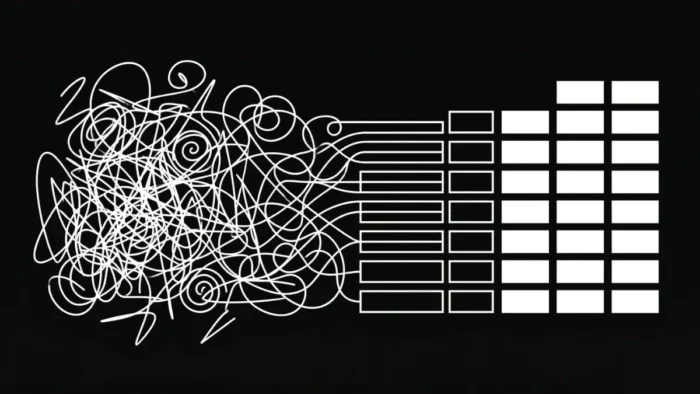
We’ve all been there—staring at a 2,000-word brain-dump that has great ideas but zero logical flow. AI tools are fantastic at helping you structure that chaotic mess into clear, logical sections.
When your ideas are arranged properly, the content instantly becomes easier to read and follow. AI can help you review your overall structure and suggest ways to:
- Arrange headings and paragraphs in a sensible, narrative arc.
- Improve the overall clarity of your core argument.
- Simplify overly complex, run-on sentences that confuse the reader.
- Ensure your most valuable key points aren’t buried at the absolute bottom of the page.
The “Reverse Outline” Method
One of the most powerful ways to use AI for structural editing is the Reverse Outline.
Paste your messy draft into your AI tool and ask: “Please read this draft and create a bulleted outline of the main points I am making, paragraph by paragraph.”
When the AI hands you the outline, look at it critically and ask yourself following questions:
- Did it miss your main point?
- Are your arguments out of order?
If the AI couldn’t figure out your logical flow, your human readers definitely won’t be able to either.
These small, structural adjustments help you produce incredibly polished content without spending hours moving paragraphs around blindly.
If there is one section of this guide you take to heart, make it this one.
To create content that aligns with Google’s Helpful Content guidelines and meets high E-E-A-T (Experience, Expertise, Authoritativeness, and Trustworthiness) standards, you absolutely cannot just copy-paste AI output and hit publish. You need to employ a Human-in-the-Loop (HITL) approach.
HITL simply means that at critical junctures of the content creation process, a human being is actively reviewing, guiding, and verifying the AI’s work. Without the human element, you risk publishing generic fluff—or worse, blatant misinformation.
Let’s look at the two biggest hurdles you will face when using AI, and how your human judgment is the only way to solve them.
Hallucinations and the Fact-Checking Burden
We need to have a very honest conversation about how AI models actually work. Large Language Models do not “know” facts in the way a human or a traditional database does.
They are incredibly advanced prediction engines. They calculate the most likely next word in a sequence based on their training data.
Because of this, they are prone to what the tech industry calls “AI hallucinations.”
A hallucination is when the AI generates a completely false piece of information but presents it with absolute, unwavering confidence. It might invent a fake historical event, attribute a quote to the wrong expert, or even generate a fake hyperlink to a research study that does not exist.
Your new role as a modern writer is shifting slightly from pure creator to curator and fact-checker.
When you use AI to help draft or outline an article, the burden of truth falls entirely on your shoulders.
You must verify every statistic, double-check every claim, and ensure your content is grounded in reality. To build real authority and trustworthiness with your audience, you must inject your own lived experience into the text.
Did the AI suggest a generic marketing strategy? Great. Now, rewrite that section to include a specific case study from your own business, complete with real numbers and personal insights that no AI could ever replicate.
Why “AI Detectors” Are Only Half the Solution
Because of the explosion of AI-generated content, there has been a massive rush to create tools that can spot it. As transparency becomes a key part of the modern writing process, many writers and editors now review their text’s authenticity using an AI detector free solution.
These tools analyze text patterns—looking for things like low “perplexity” (how predictable the words are) and low “burstiness” (the variation in sentence length)—to show you exactly how AI-assisted writing appears within your content.
Running your final draft through one of these tools is a great way to maintain awareness and ensure your final piece still sounds distinctly like you.
However, we need to view these tools critically.
AI detectors are notoriously flawed. They can flag 100% human-written text as AI (false positives), especially if the writer naturally uses a highly structured, straightforward style, or if English is their second language. Conversely, heavily prompted AI text can easily bypass these detectors.
Therefore, using an AI detector is only half the solution. You shouldn’t use them to blindly punish writers or definitively prove a text is robotic. Instead, use them as a temperature check.
If a detector highlights a paragraph as 90% AI-generated, read that paragraph out loud and ask yourself:
- Does it sound boring?
- Does it lack emotional resonance?
- Is it missing a personal anecdote?
If so, use that flag as an excuse to inject more of your unique human perspective into that specific section. True authenticity comes from your distinct voice and verifiable expertise, not from passing a software’s arbitrary test.
The essence of writing is rewriting.
William Zinsser
Writers today have access to a dizzying variety of AI-based tools that focus on different parts of the editing process. It can feel overwhelming. Depending on what you need, you can use specialized tools to analyze your text, restructure it entirely, or just give it a final polish.
Here is how to think about building your personal editing tech stack.
Macro-Editing: The Heavy Lifters (LLMs)
Tools like ChatGPT, Claude, and Google Gemini are your macro-editors. You use these for the big-picture stuff.
They are best utilized in a separate browser window, acting as a conversational partner. You feed them large chunks of text and ask them to restructure arguments, change the fundamental tone, or brainstorm entirely new sections. They are the architects of your content strategy.
Micro-Editing: Tools for Content Analysis
Once the structure is solid, you need inline tools that act as a mirror, showing you exactly how your writing will appear to your readers.
Tools like Grammarly or the Hemingway App dive into readability levels, sentence length variations, and repetitive writing patterns.
Armed with these granular insights, you can adjust your text to keep your audience engaged. They catch the passive voice you missed, the commas you misplaced, and the overly complex vocabulary that might alienate a beginner audience.
Tools for Editing and Rewriting
When you are stuck on a complicated paragraph and staring at a blinking cursor, specialized rewriting features (often built into platforms like Notion AI or Google Docs) can save you hours of frustration.
They can instantly suggest alternative sentence structures to help the words flow better.
These integrated tools support everyday tasks like:
- Improving sentence flow and pacing without leaving your document.
- Adjusting word choices for a more conversational, approachable feel.
- Correcting those small, easy-to-miss grammar mistakes that ruin credibility.
- Breaking down 40-word sentences into punchy, digestible fragments for easier online reading.

AI In Different Stages Of Content Creation
Writing isn’t just one monolithic action; it happens in distinct, manageable steps. You brainstorm, you draft, you edit, and you finalize. To make the process genuinely efficient, AI tools can be injected into your workflow at every single stage.
Take a look at how this breaks down practically:
| Writing Stage | The Human Action | How AI Acts as Your Assistant |
| Idea Planning | Deciding on the core message and target audience based on real-world experience. | Suggests related semantic topics, outlines structural frameworks, and organizes your key points into a logical flow. |
| Drafting | Pouring your raw expertise, stories, and data onto the page. | Assists with overcoming writer’s block by providing sentence starters, pacing suggestions, and maintaining momentum so you don’t get stuck. |
| Editing | Refining the argument, injecting brand voice, and adding deep subject matter expertise. | Corrects grammar, simplifies clunky wording, identifies passive voice, and dramatically improves overall readability scores. |
| Final Review | Fact-checking, adding internal links, and ensuring the content serves the reader’s intent. | Checks for overall clarity, tone consistency across the entire document, and flags formatting issues before publication. |
When AI handles the technical, repetitive corrections at each of these stages, the most time-consuming and emotionally draining part of writing—the editing phase—flies by. You no longer have to waste your prime creative energy arguing with a semicolon.
Let’s look ahead. Many modern writers, marketers, and business owners are tasked with creating multiple pieces of high-quality content every single week. It is a grueling pace. AI editing tools are rapidly becoming essential for managing this heavy workload efficiently without burning out.
By instantly suggesting corrections and providing structural feedback, AI helps writers maintain a smooth, uninterrupted workflow.
When the mechanical aspects of the writing process become easier to manage, you unlock something incredibly valuable: time.
You can spend far more time interviewing subject matter experts, conducting original research, storytelling, and developing truly useful ideas that genuinely help your audience.
Upskilling in the Age of AI
But the benefits aren’t reserved just for seasoned professionals trying to scale their output. AI is also proving to be an incredible, personalized learning tool for new writers.
Think back to how you learned to write. You probably handed a paper to a teacher, got it back a week later covered in red ink, and barely understood why something was wrong.
Today, by reviewing the instant suggestions provided by advanced editing tools, beginners can clearly see why a sentence is clunky and how to fix it in real-time.
Over time, these daily suggestions act like a built-in, private writing coach. It helps new writers build immense confidence, expand their vocabulary, and systematically develop stronger, clearer communication skills. It democratizes the ability to write well.
As technology continues to advance at a breakneck pace, it will only become easier for people to communicate their thoughts effectively. Clear writing helps the world understand complex information better, and AI is playing a undeniably massive role in making that a reality.
However, no matter how advanced the algorithms get, or how flawless the grammar-checking software becomes, human ideas will always remain the center of every truly great piece of content.
You are the one with the pulse. You are the one who decides what stories to tell, what vulnerable examples to include, and how to explain a difficult topic in a way that resonates with another human being’s actual lived experience.
AI cannot feel empathy, and it cannot experience the world. It is simply the ultimate digital assistant, standing by to help you polish your brilliant, messy, human ideas and present them beautifully to the world.
Embrace the partnership, stay vigilant with your fact-checking, and keep writing.