

Customers are the absolute heart of every small business. We can talk all day long about validating your business idea, building complex systems, streamlining operational processes, and debating the latest management theories. But let’s be brutally honest: without customers, all of those things are completely useless.
At the end of the day, your primary job as an entrepreneur boils down to four distinct, continuous phases: finding, attracting, acquiring, and maintaining customers for your business.
Acquiring new customers is not an easy job, and anyone who tells you otherwise is either lying or trying to sell you a magical marketing course. It is also staggeringly expensive. You cannot simply assume you will always easily replace your current customers with new ones. In fact, research by Bain & Company and Harvard Business School shows that increasing customer retention rates by just 5% can increase your profits by anywhere from 25% to 95%.
Maintaining the customers you already have is vastly easier, exponentially more cost-effective, and the true secret to long-term predictability and profitability. Yet,
I constantly see small business owners putting 90% of their time, energy, and marketing budget into acquiring new buyers, entirely forgetting to nurture and maintain the existing ones who actually pay the bills.
Profit in business comes from repeat customers, customers that boast about your product or service, and that bring friends with them.
W. Edwards Deming
Before we get to the solutions, we have to look at the root cause.
Why do we neglect our best buyers?
It’s human nature. The thrill of the hunt—closing a new deal—gives us a massive dopamine hit. Serving a client we landed three years ago doesn’t feel as “exciting.”
This creates the “Leaky Bucket” syndrome.
You are pouring water (new leads and buyers) into the top of the bucket at a massive expense, but because you are ignoring customer experience, they are pouring right out of the holes in the bottom.
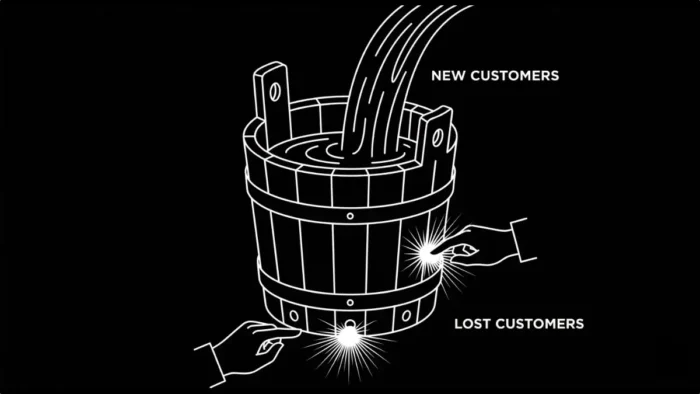
Because of this fatal flaw in most business strategies, I want to share my core ideas on what you absolutely must do for your current customers to ensure a sky-high retention rate.
Let’s break these 20 strategies down into five actionable pillars.
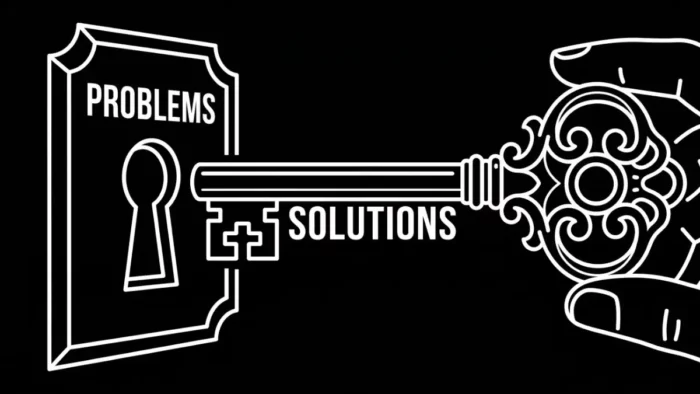
Your customers don’t just want to buy things from you; they first want their frustrations eliminated. When you completely shift your mindset from “vendor trying to hit a quota” to “consultant trying to solve a problem,” your retention rates will transform overnight.
Don’t find customers for your products, find products for your customers.
Seth Godin
1. Make problem-solving your primary job
This is where it all starts. Don’t just hand over a product and walk away; actively look for the friction in their lives or businesses and fix it.
For example, if you run a marketing agency and you notice your client’s sales team doesn’t know how to close the leads you are generating, don’t just say “not my problem.” Help them write a sales script.
Simply, conduct a quarterly “Friction Audit.” Sit down with your top five clients and ask them, “What is the single hardest part of your job right now?“
Listen closely, and figure out how your business can bridge that gap.
2. Satisfy their deeper, unstated needs
Go beyond the surface level. Anticipate what they actually need before they even realize it themselves.
There is a famous business adage by Harvard professor Theodore Levitt: “People don’t want to buy a quarter-inch drill. They want a quarter-inch hole.”
If you sell payroll software, their deeper need isn’t the software itself—it’s the peace of mind knowing the IRS won’t audit them and their employees will be happy.
Work on satisfying that psychological need through extreme reliability and clear communication.
Write down the physical product or service you sell. Next to it, write down the emotional outcome the customer actually wants. Realign all your follow-up emails to focus on that emotional outcome.
3. Help them use your products and services
Don’t just make the sale, cash the check, and disappear. Offer onboarding, quick check-ins, or tutorials to ensure they know exactly how to use what they just bought.
Buyer’s remorse usually kicks in within the first 48 hours. If they buy your consulting package but don’t know how to access the materials, they will feel foolish and frustrated.
You must ensure you have an automated, 30-day email onboarding sequence. In week one, send a quick 2-minute video showing them the most important first step to take with your product.
4. Help them extract the maximum value
Push them to use every single feature or benefit of your service. When they take maximum advantage of your offerings, your product becomes so deeply integrated into their life that it becomes indispensable.
Think about a gym membership. The gyms that retain members don’t just let them wander around; they offer a free personal training session to get them hooked on a routine.
So, once a month, send out a “Did you know you could do this?” message. Highlight a lesser-known feature of your value proposition or service that can save them time or make them money.
People do business with people they know, like, and trust. If you treat your buyers like generic numbers on a spreadsheet or automated tickets in a queue, they will eventually leave you for a competitor who looks them in the eye and treats them like human beings.
People will forget what you said, people will forget what you did, but people will never forget how you made them feel.
Maya Angelou
5. Start talking and build strong relationships
Pick up the phone. Have real, unscripted conversations that have absolutely nothing to do with selling, pitching, or upgrading.
The most powerful business tool you have isn’t your CRM; it’s your voice. An email can be misinterpreted, but a warm phone call builds instant rapport.
Block out 30 minutes every Friday afternoon. Call three current customers. When they answer, simply say: “Hey, I’m not calling to sell anything. I just wanted to check in and see how the quarter is treating you.”
Watch how shocked and appreciative they are.
6. Ask them about their health and well-being
A simple, genuine “How are you holding up lately?” goes a remarkably long way in showing you view them as a person, not a walking wallet.
We live in a highly stressful, fast-paced business environment. Acknowledging that stress and showing empathy creates a psychological bond.
If you know a client just finished a massive product launch or a stressful busy season, send a brief message acknowledging their hard work and hoping they get a chance to rest and recover.
7. Ask them about their family (and remember the details)
Remember the details. Show that you genuinely care about the people who matter most to them.
If a client tells me their daughter is playing in a state soccer championship this weekend and I don’t ask about it on Monday, I have failed at relationship-building.
Utilize your database for identifying your target market and tracking their needs. Every time a client mentions a spouse’s name, a pet, a hobby, or a vacation, write it down. Review those notes for 60 seconds before your next meeting.
8. Always show your smile
Whether you are face-to-face or on a phone call, project positive, welcoming energy every time you speak with them.
Yes, people can literally hear a smile through the phone. It changes the shape of your vocal cords and alters the tone of your voice.
When you project positive energy, their mirror neurons fire, and they subconsciously associate your brand with feeling good.
You must have a Post-it note on your computer monitor that simply says “Smile.”
Force yourself to do it right as the phone rings or the Zoom camera turns on.
9. Transition into a real friend and trusted advisor
Professional boundaries are absolutely important, but you should strive for a dynamic where they view you as a trusted confidant and friend in your specific industry.
For example, let’s say a vendor takes orders. A trusted advisor tells the client when they are making a mistake. When you care enough to protect them from bad decisions, you move from “contractor” to “friend.”
Next time a client asks to buy something from you that you know they don’t actually need, tell them no.
Say, “I could sell this to you, but I honestly don’t think it will help you right now. Let’s hold off.”
The trust you build in that moment is priceless.
10. Make them your VIPs
Treat every single customer like they are the most important person to you and your small business. When they feel that level of white-glove importance, loyalty is guaranteed.
Look at the hospitality industry. The Ritz-Carlton empowers its employees to spend up to $2,000 to resolve a guest issue without asking for a manager’s approval. They make the guest feel supreme.
When a long-term customer calls with an urgent issue, stop what you are doing. Say, “You are a top priority for us. I am pausing my other work to handle this for you right now.”

Trust is built when you do what you say you will do. Unbreakable, fierce loyalty is built when you consistently do more than you said you would do.
11. Deliver absolutely everything you promise
This is the baseline of business survival. If you promise a Tuesday delivery, it arrives on Tuesday. No excuses, no supply chain blaming, no delays.
If you fail here, none of the other 19 points matter. A smiling face means nothing if the product is broken or late.
To ensure this will not happen, audit your B2B sales process. Are your salespeople over-promising just to close the deal? Ensure that marketing, sales, and fulfillment are all perfectly aligned on what can actually be delivered.
The goal as a company is to have customer service that is not just the best but legendary.
Sam Walton
12. Occasionally deliver more than promised
This is the classic “under-promise and over-deliver” strategy. Give them a little extra value they didn’t pay for, and the element of surprise will delight them.
If you tell a client a project will take 5 days and you deliver it in 3, you are a hero. If you tell them it will take 2 days, and you deliver it in 3, you are a failure. Managing expectations is just as important as the execution.
You can build a 20% buffer into your standard delivery times. Use that buffer to either ensure you never miss a deadline or to consistently shock them with early delivery.
13. Help them even when they don’t ask
Don’t wait for an SOS signal. If you see an area where they are struggling—even if it’s slightly outside your normal scope of work—step in and offer your help proactively.
For example, if you sell SEO consulting services, you can regularly scan the websites of your past consulting clients. If you notice a broken link on their checkout page, you will email them immediately. However, you don’t charge them for this; you just want them to help succeed.
Keep your eyes open for opportunities to connect your clients. If Client A needs a great graphic designer, and Client B is a graphic designer, introduce them. You become the invaluable hub of their network.
When a customer feels like they have a literal voice in the trajectory of your company, they become emotionally invested in your success. They stop being just a buyer and become a brand partner.
14. Make them part of your future product development
Ask them what features, integrations, or new services they wish you offered. Let their actual friction points guide your R&D roadmap.
Why spend $10,000 developing a new service only to find out nobody wants it? Your current customers are the ultimate focus group.
Before launching a new product, create a “Beta Testing Group.” Invite your top 10% of loyal customers to try it for free in exchange for their feedback. They will feel incredibly special, and your product will be vastly improved.
15. Include them in improving your current offerings
Ask for their brutal, unfiltered, honest feedback on what you are currently selling. What do they hate? What do they love?
According to a study by PWC, 32% of all customers will stop doing business with a brand they loved after just one bad experience. You need to know if they are having a bad experience before they leave, which prevents customers from stopping buying from you.
Send a simple, plain-text email that says: “We are trying to improve. If you could change just one thing about how we do business together, what would it be?”
Don’t get defensive when they answer. Just fix it.
16. Include them in building your business
Seek their advice on your overall business direction. People love being consulted for their expertise.
If your client is a logistics expert and you are struggling with your own shipping costs, take them to lunch and ask for their advice. It flips the dynamic and shows you respect their intellect.
Consider forming an informal “Customer Advisory Board” made up of 4-5 key clients. Meet virtually twice a year to discuss industry trends and where your company should head next.
17. Include them in your business improvement efforts
If you are trying to streamline your customer service protocols, your billing systems, or your website UI, ask them how the current process actually feels from their side of the table.
As the business owner, you suffer from the “Curse of Knowledge.” Your website navigation makes perfect sense to you because you built it. It might be a nightmare for a 60-year-old client trying to pay an invoice.
You must ask a client to share their screen on Zoom and walk you through how they place an order with you. Watch where their mouse hesitates. That hesitation is where you are losing money.
Never let a customer feel like you only care about them when an invoice is due or a contract is up for renewal. Appreciation is a highly underutilized retention tool.
18. Show relentless gratitude
Say “thank you” clearly, loudly, and often. Express genuine gratitude just for the simple fact that they chose to communicate and do business with your small company instead of a giant, faceless competitor.
In a digital world of automated “Thanks for your order!” email receipts, doing something analog is incredibly disruptive.
Go buy a stack of high-quality thank-you cards. Once a week, write a handwritten note to a customer. Tell them exactly why you appreciate their business, put a physical stamp on it, and mail it. It will sit on their desk for months.
19. Send them useful, strategic gifts
Don’t send cheap promotional junk with your logo plastered all over it. A cheap pen is a marketing expense, not a gift. Send them something highly useful or personalized so they will genuinely remember you every time they use it.
The best gifts are hyper-personalized. If you know a client loves to barbecue, a custom set of grilling spices with their family name on it will mean the world to them.
Keep a few copies of a business book that fundamentally changed your life. Mail it to clients with a note saying, “I just read this and thought the chapter on [Topic] would be perfect for your current expansion goals.”
20. Prove you haven’t forgotten them
Reach out to dormant customers. Even if they haven’t bought from you in months or years, send a message just to check in. Show them they matter to you regardless of their current purchasing status.
A dormant customer is highly likely to buy from you again because trust has already been established. They usually haven’t bought recently simply because life got in the way and they forgot about you.
Use the famous “9-Word Email” strategy.
Find 10 customers who haven’t bought in a year. Send an email with the subject line: [Their Name]. The body of the email should just be: “Hi [Name], are you still looking for help with [Specific Problem You Solve]?”
You will be shocked at the response rate.
You might be reading these 20 steps and thinking, “Dragan, this all sounds incredibly warm and fuzzy, but I am running a business. How do I measure the ROI of a handwritten note or a phone call?”
As a consultant who leans heavily into tracking managerial skills and metrics, I agree. You must track your retention metrics to ensure these efforts are actually moving the needle.
- Track Your Churn Rate: How many customers left you this quarter compared to the total number of customers you served? If you implement these 20 steps, you should see that percentage drop steadily over six months.
- Monitor Customer Lifetime Value (CLV): Are your existing customers buying more from you over time? Co-creating products and maximizing value (Pillars 1 and 4) will naturally drive your CLV up.
- Deploy a Net Promoter Score (NPS): Simply ask your customers on a scale of 1-10, how likely are they to recommend your business to a friend. The higher the score, the more effective your relationship-building (Pillar 2) is working.
Related: Customer Retention Strategies That Drive Business Growth
This list is not exhaustive. In fact, there are countless more things you can do; only your imagination limits the possibilities you have to delight your current customers. You can always, always do more.
Feel free to use this guide as a foundational baseline. Inject your own creativity, adapt it to your specific industry constraints, and make this list much larger.
Finally, do not just read this, nod your head, close the tab, and move on. Implement it. This knowledge is completely worthless if you don’t put it into action.
Pick just three of the action steps I outlined above. Put them on your calendar for this week, and execute them. I guarantee you will see a shift in how your customers respond to you.
What are the three strategies you are going to implement today?