

Most people are using AI to make themselves dumber.
I know that sounds harsh. But let me explain.
Every day, people open ChatGPT or Claude or Gemini and ask it to summarize a book they have not read.
They ask it to write a strategy they have not thought through. They ask it to generate insights they did not earn.
And then they copy-paste the output into their Notes app, close the tab, and tell themselves they just leveled up.
But, they did not level up. They just outsourced their thinking to a probability engine.
Thinking is the hardest work there is, which is probably the reason why so few engage in it.
Henry Ford
Here is the uncomfortable truth: AI does not know the future.
It cannot invent the next framework you will need. It cannot spot the blind spot in your business model that no one has written about yet.
It can only forecast based on historical data, and as anyone who has ever tried to do sales forecasting knows, historical data gets you maybe 60% of the way there on a good day.
The rest?
That has to come from you. From your brain. From your ability to learn, reframe, connect, and create something the training data has never seen.
And that is the problem. Because most of us were never taught how to actually learn.
We were taught how to pass tests (even when we try to bypass learning). We were (or not) taught how to highlight textbooks. Also, we were taught how to sit quietly while someone talks to us for 90 minutes.
But we were not taught how to take raw information and convert it into real, usable, tacit knowledge, the kind of knowledge that changes how you operate, not just what you can recite.
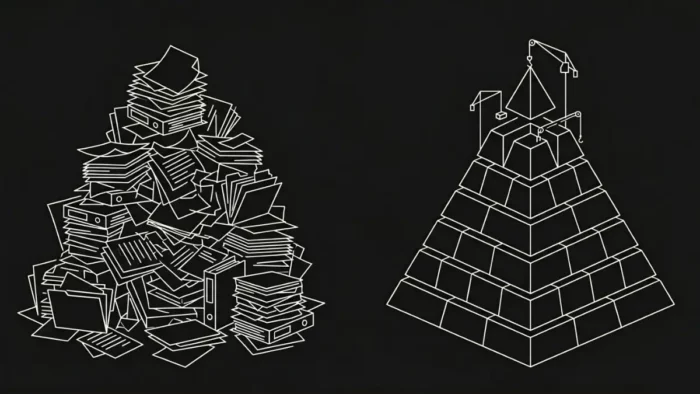
The first kind of person is the Archivist.
These people collect information like some people collect stamps. They have folders full of saved documents (ideas, thoughts, book highlights, quotes, etc). Bookshelves full of highlighted passages, and a Notes app that looks more like the control room of a spaceship rather than useful notes.
But when you simply ask them to make a decision, solve a novel problem, or build something from scratch, they freeze. They have all the ingredients and no recipe.
The second kind of person is the Architect.
The Architect also collects information. But they do not store it. They build with it.
Every piece of knowledge gets tested against reality. Every framework gets pressure-tested. And every insight either earns its place in the structure or gets discarded.
The difference between the Archivist and the Architect is not intelligence. It is not hours invested. It is a method. And that’s the method I want to give you today.
The Learning Trap Nobody Talks About
Before I walk through the framework, I need you to see the trap. Because if you do not see it, you will keep walking into it.
The trap is this: most “learning” activities produce the feeling of progress without producing any actual progress.
If more information was the answer, then we’d all be billionaires with perfect abs.
Derek Sivers
Re-reading a book chapter feels productive. Highlighting a passage feels productive. Watching a 30-60-minute YouTube video at 2x speed while you eat also feels productive. Asking AI to give you a bullet-point summary of a concept you barely understand also feels productive.
But here is what the research actually shows: re-reading is one of the least effective ways to retain information.
Highlighting is slightly better than doing nothing.
And AI summaries, when consumed passively, create what psychologists call the “illusion of fluency.” You recognize the words. You nod along. You feel like you got it.
Then someone asks you to explain the concept in your own words, and you realize you cannot.
This is a version of what I call the Busyness Paradox.
Busyness is input. It is the hours you clock, the pages you flip, the summaries you read.
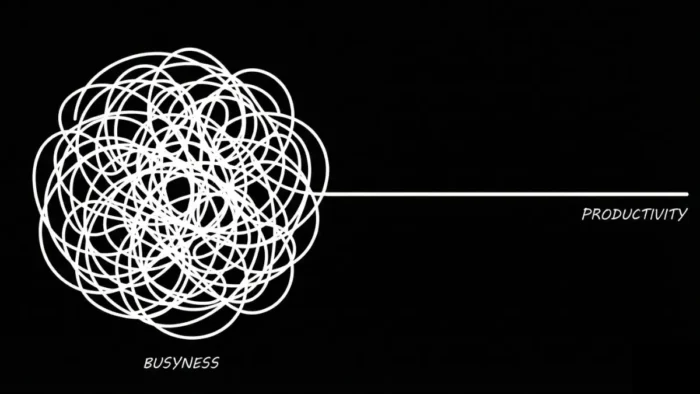
But productivity is output. It is the quality of your decisions, the speed of your problem-solving, the originality of your thinking.
The Archivist is trapped in the Busyness Paradox of learning. High input. Low conversion. Maximum wasted energy.
The Architect breaks out.
Over the last several years, I have studied how the most effective self-learners operate.
Not the people with the most degrees. Not the people who read 200 books a year. The people who can look at a new domain, extract the signal, internalize it, expand it, and then build something original on top of it.
What I found is that their process follows a consistent pattern. I have organized that pattern into a framework I call the A.C.T.I.V.E. Learning Framework.
The acronym stands for Aim, Curate, Test, Iterate, Verify, and Execute.
Each phase is anchored in cognitive science. But more importantly, each phase is designed to solve a specific failure mode that keeps smart people stuck in Archivist mode.
Let me walk you through it.
A: Aim (Define the Bottleneck, Not the Topic)
Most people start learning wrong. They say, “I want to learn about AI.” Or “I want to learn marketing.”
That is not an aim. That is a Wikipedia category.
A real aim is specific. It has a shape. It is tied to something you need to build, solve, or ship.
“I need to build a customer acquisition funnel for my B2B SaaS product.”
“I need to understand transformer architectures well enough to fine-tune a model for my use case.”
The difference is enormous. When your aim is unclear, everything looks relevant.
You cannot filter. You cannot prioritize. Simply, you end up reading 47 articles, watching 12 videos, and still not knowing where to start.
On the other side, when your aim is specific, the irrelevant stuff bounces off. You know exactly what you are hunting for.
There is a cognitive principle behind this called the Zeigarnik Effect. Humans remember unfinished tasks better than completed ones.
When you define a specific project and leave it slightly open-ended, your brain keeps working on it in the background. It becomes a psychological “itch” that pulls you back to the work.
There is also the Zone of Proximal Development, a concept from Lev Vygotsky.
This concept says that optimal learning happens when the goal sits just outside your current ability, close enough to reach with effort, far enough to require growth.
However, if the gap is too small, you are bored. If it is too large, you simply shut down.
My Staircase Strategy applies here directly.

You cannot skip steps. You cannot go from “I know nothing about coding” to “I will build an AI startup” in one leap.
That is not ambition. That is fantasy benefits without executable reality.
Pick the next step. Define it sharply. That is your aim.
C: Curate (Filter Like Your Brain Depends on It)
Once you have an aim, you know what you want to achieve, you face the second failure mode: drowning in sources.
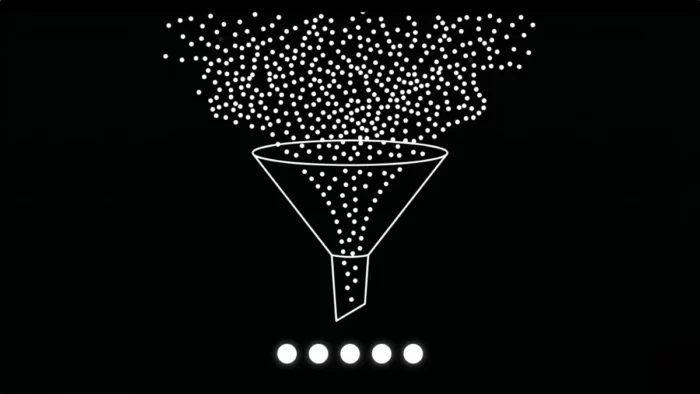
The internet is a firehose. For any topic you pick, there are hundreds of thousands of articles, hundreds of books, dozens of courses, and an infinite scroll of social media takes. If you try to consume it all, you will never start.
This is where Miller’s Law becomes useful. According to Miller’s Law, the human brain can hold roughly seven (plus or minus two) chunks of information in working memory at any given moment. That is your mental workbench. Everything else falls off.
If you put 50 sources onto that workbench, it’s there, but in reality, nothing stays.
You experience what cognitive scientists call “extraneous cognitive load,” mental effort spent on processing the format, the confusion, the contradictions, rather than the meaning.
The solution is curation. Ruthless curation.
The 80/20 Rule, the Pareto Principle, applies brutally to learning. Roughly 80% of the usable knowledge in any domain comes from about 20% of the available material. Your job is to find that 20% and ignore the rest.
How do you find these 20%?
You can use three filtering questions:
- Does this source directly address my specific aim, or is it just “related”?
- Is this source written by someone who has actually done the thing, or just someone who has written about it?
- Does this source explain the mechanism (the “how” and the “why”), or does it just list tactics?
If the answer to any of those is “no,” skip it. You are not being lazy. You are protecting your mental workbench.
Peter Drucker once said, “There is nothing so useless as doing efficiently that which should not be done at all.”
Curating is the art of knowing not what should be done, but what should not be done at all.
T: Test (Learning Is Retrieval, Not Review)
Here is where most people’s process collapses.
They read the material. They highlight the material. They might even take notes on the material. And then they move on to the next piece of material, feeling accomplished.
They just mistook recognition for recall.
Recognition is when you look at a sentence and think, “Oh yeah, I remember seeing that.”
Recall is when you close the book and try to reconstruct the argument from memory.
Recognition feels like learning. Recall is learning.
The research on this is overwhelming. Active retrieval, forcing yourself to pull information out of your brain without looking at the source, creates significantly stronger neural pathways than passive review. Testing is not an evaluation of learning. Testing IS the learning process.
This is why the Feynman Technique is so powerful. Named after the Nobel physicist Richard Feynman, the method is simple: explain the concept you are trying to learn as if you were teaching it to a child.
No jargon. No hand-waving. No “you know what I mean.”
If you cannot do it, you do not understand it yet. The gaps become instantly visible.
For T as a part of the A.C.T.V.E Learning Framework, I also borrow a concept from physical training here: progressive overload.
In the gym, you do not get stronger by lifting the same weight forever. You have to increase the resistance.
The brain works the same way. Once a concept feels comfortable, you need to push it into harder territory: apply it to a new context, combine it with another concept, and find the edge case where it breaks.
Simply, in learning, comfort is the enemy of competence.
I: Iterate (Find the Edges and Sleep on It)
Learning is not linear. You do not go from 0% to 100% in a straight line. You hit plateaus. You hit walls. You have days where everything clicks and days where nothing makes sense.
This is not a sign that you are doing it wrong. It is a sign that your brain is doing the actual work of rewiring itself.
The key here is to stop expecting linear progress and start designing for iteration.
Two techniques matter here.
The first is interleaving.
Instead of plugging into one topic until you master it, you switch between related topics or problem types.
Yes, it feels harder in the moment. Your brain struggles more. But that struggle is exactly what deepens the learning process.
Blocked practice creates the illusion of mastery. Interleaved practice creates actual mastery.
The second, and this one surprises people, is sleep.
Neuroscience shows that during deep sleep, your brain engages in synaptic consolidation, strengthening the neural connections formed during the day. During REM sleep, it runs pattern recognition, finding hidden connections between ideas you studied separately.
Personally, I have experienced this many times in my life without even knowing about it. So many times I have solved complex problems in my dreams. Suddenly, in the morning, the solution is clear.
You can learn for eight hours, or you can study for two hours and sleep on it. The person who sleeps will retain more and understand more deeply.
Simply, iteration requires rest. It is not wasted time. It is the time when the real work happens.
V: Verify (Your Brain Lies. AI Lies More.)
This phase is the most dangerous one to skip.
Your brain has a built-in flaw called confirmation bias.
When you discover information that confirms what you already believe, you accept it immediately.
When you encounter information that contradicts it, you scrutinize it harshly, or you ignore it entirely.
You can see this phenomenon in action in the social media political posts. People accept opinions that align with their views and dismiss those that don’t. There is no critical thinking.
AI makes this worse, not better.
Why?
Because AI tools are not truth engines. They are probability engines. They predict the next most likely word based on patterns in their training data.
They do not “know” anything. They do not “believe” anything. They just complete sentences in statistically plausible ways. And they do it with such confidence that you simply forget to question them.
This happens a lot. Someone asks AI a question, gets an answer that sounds confident, and just accepts it. Only later do they realize the answer was wrong, incomplete, or even made up.
The solution is to verify. Always fact-check what AI gives you.
What can you do?
Check the citations, look up the original sources, and ask follow-up questions like, “What is the strongest argument against what you just told me?”
If possible, ask someone with real expertise in the topic.
This is not paranoia, but intellectual hygiene.
And here is the deeper point, the one I wrote on a card that has been sitting on my desk almost two years simply to remind me that:
AI cannot predict future frameworks, tools, or ways of thinking. It can only remix what already exists.
If we allow AI to do all our thinking for us, we stop producing the new, innovative, creative inputs that AI itself needs to keep evolving.
We become the dead-end of our own intelligence pipeline.
So, verification is not just about catching errors. It is about staying in the game as a thinking, contributing human being.
E: Execute (Knowledge Is Only Potential Energy)
Knowledge is of no value unless you put it into practice.
Anton Chekhov
This is the phase where the Archivist and the Architect finally separate.
The Archivist finishes the first five phases and says, “Great, I understand this now.” Then they file their notes and move on to the next topic.
The Architect finishes the first five phases and says, “Now I need to build something with this.”
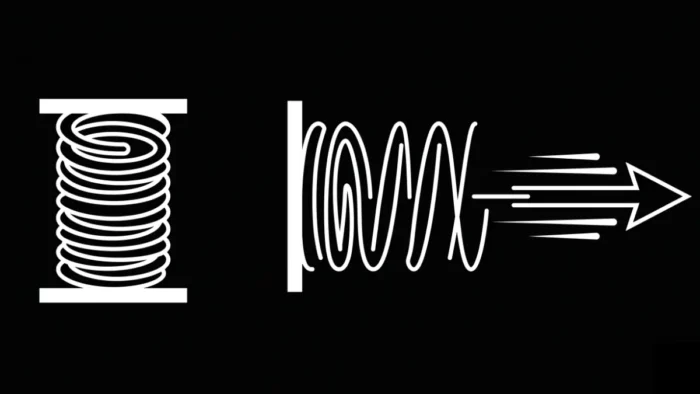
Knowledge without execution is what I call Business Potential Energy. It has the capacity for doing work. The potential is real.
But potential that never converts into kinetic output is just a museum exhibit. It is a collection of good ideas that never left your hard drive.
Execution is what converts the potential into kinetic.
There are three ways to execute on what you have learned.
- The first is teaching. The Protégé Effect is well-documented: when you teach a concept to someone else, you learn it more deeply than you ever did as a student. Teaching forces you to organize your thoughts, close the gaps, and make the implicit explicit. You do not truly know something until you have taught it.
- The second is building. Take the knowledge and apply it to a real project. If you learned about customer acquisition, go acquire a customer. If you learned about financial modeling, build a model for your own business. Tacit knowledge, the kind you cannot fully articulate but that makes you effective in the real world, is forged only by doing.
- The third is transferring. Take the concept you learned in one domain and apply it to a completely different domain. If you learned a negotiation framework from sales, use it in your personal relationships. If you learned a systems-thinking principle from biology, apply it to your content strategy. True mastery shows up in transfer. If you can only use the knowledge inside the original context, you have not mastered it. You have only memorized it.
I promised this would not be abstract. So let me give you the concrete steps.
Step 1: Build Your Knowledge OS
Do not dump everything into one folder. Create a three-tier architecture for your learning.
- Tier 1 is Project Notebooks. This tier is a short-term space for a specific goal. You add 10 to 20 valuable sources, like PDFs, transcripts, or articles—anything that helps the project. When you finish, keep the best insights and store away the rest.
- Tier 2 is Domain Notebooks. These are long-term spaces for your ongoing interests, like behavioral psychology, business strategy, or writing. Here, you add important books and key research. Over time, these notebooks grow and become more valuable.
- Tier 3 is the Master Vault. One notebook. Into it goes the best insights from every Project Notebook and every Domain Notebook. This is where cross-disciplinary connections happen. It is your personal canon.
This architecture ensures that your knowledge does not just sit there. It flows. From project to domain. From the domain to the master vault. From master vault to future projects.
Step 2: Run a Knowledge Audit
Once your sources are loaded, do not ask AI for a summary. Ask it to do higher-order analysis. Here is the prompt I use for my Master Vault Notebook inside NotebookLM:
“Analyze every source in this notebook and build a Knowledge Audit Report. Give me: (1) the five dominant themes across all sources, ranked by frequency, with citations. (2) Three ideas that appear in different sources but have not been explicitly connected. (3) Blind spots: topics I clearly care about based on my sources but have zero coverage on. (4) How my thinking on this topic has shifted based on the chronological pattern of sources I have added. (5) Three specific types of sources I should add next to fill the most critical gap.”
Simply, this prompt will turn AI (NotebookLM) from a summarizer into a sparring partner. Yes, intellectual partner, but only on items that pass the Project and Domain filters. It forces the AI tool to find patterns you missed, gaps you did not see, and connections you did not make.
Step 3: Use the Intelligent Gym
To combat the illusion of fluency, use AI for cognitive friction, not cognitive ease. Here is the prompt:
“I need to master the concepts in these sources. Act as my sparring partner. Quiz me on the core concepts using progressive overload. Start with a basic question and wait for my reply. If I am right, increase the difficulty to an application-level question and wait for my reply. Finally, give me a highly complex, multi-factorial scenario where these concepts might fail, and ask me how to navigate it.”
This is the opposite of what most people do with AI. Most people use AI to make learning easier. The Architect uses AI to make learning harder, in a productive way, the way that forges real competence.
Step 4: Demand Counter-Arguments
Before you complete your understanding of anything, ask the AI this:
“What is the strongest counter-argument or opposing data to the conclusion we just reached?”
If the AI cannot produce a strong counter-argument, you have not explored the edges. If it can, you now have something to verify, test, and integrate. Either way, you are sharper than you were before.
Let me bring this back to where we started.
AI is the most powerful learning tool ever created. It can compress research timelines. It can surface patterns across thousands of documents. It can simulate conversations with experts you will never meet.
But it cannot do the one thing that actually matters: it cannot do the thinking for you.
The Archivist looks at AI and sees a shortcut. “Tell me what I need to know so I can move on.”
The Architect looks at AI and sees a sparring partner. “Challenge me. Test me. Show me what I am missing.”
The Archivist accumulates. The Architect builds.
The Archivist feels busy. The Architect becomes dangerous.
The framework I have laid out here, Aim, Curate, Test, Iterate, Verify, Execute (A.C.T.I.V.E Learning Framework), is not complicated. It does not require special software or a degree in neuroscience.
It all starts with making a decision to stop seeing learning as just taking things in and start seeing it as building something. Instead of collecting good ideas that never leave your hard drive, focus on bringing real value into the world.
Here’s the thing about potential energy: nothing happens until you turn it into action.
Set a clear goal. Find what’s holding you back. Be selective about what matters. Push yourself, even when it’s tough. Keep improving, even when progress slows. Check your results. And most importantly, take action—this is where many people stop short.
Build something. Teach someone. Ship the work.
That is how you become dangerously self-educated. That is how you stay ahead of the machine. And that is how you make sure that when the AI needs new ideas to remix, it finds them coming from you.