

Strategy is not analysis. Period. Too often, many of you, including myself, fall for fake strategies that only resemble real planning without delivering results.
Analysis, in large part, feels like work. Reading every industry report feels like work. Building a five-year roadmap feels like work. And every week you pour into them is a week where nothing real lands in anyone’s hands.
That is the trap. Most of what gets called strategy is procrastination disguised as planning.
One of the three fake strategies below is running your calendar right now. You will recognize it the moment you read it. And by the end of this piece you will hold a single sentence that replaces all three of them: the difference between a business that plans and a business that ships.
Productivity is a ratio, specifically output divided by input; busyness, despite all the drama it creates, is merely the input—that is, the hours you work, the energy you use, and the documents you produce. It represents the cost you incur in order to achieve a result and not the result itself.
This is something that most people are aware of; when it’s mentioned at a conference, they nod in agreement and then carry on treating a full calendar as evidence of progress. The most hazardous quadrant is one involving high busyness coupled with low output, since it does just feel like work. I refer to this as the Busyness Paradox.
Strategy is suffering from the same flaw, and in fact the problem is even greater since strategy is associated with status. No one intentionally boasts about being busy. People do boast about being strategic. A strategy retreat seems serious. A roadmap seems serious. A SWOT analysis seems serious.
Serious and useful are different animals.
A strategy that never ships is a document. A document has never paid a mortgage, closed a client, or moved a business one inch forward.
In the language I use with the entrepreneurs I work with, a plan is stored potential energy. It is capacity for doing work with no work actually done. Its value sits at exactly zero until something converts it into motion.
Think of it as the difference between a boulder sitting at the top of a hill and a boulder rolling down it.
The first one holds all the potential in the world and does nothing. The second one moves.
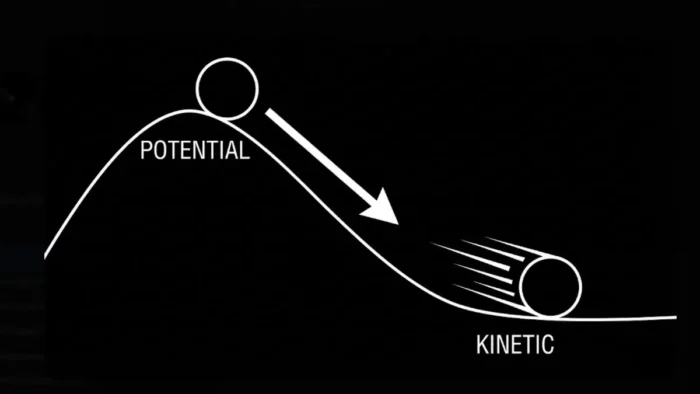
The first thing in your plan is a boulder; it appears impressive from the outside but has no effect on the world.
Sun Tzu made it clear more than two thousand years ago that strategy without tactics is the most sluggish path to victory and that tactics without strategy are just the noise that precedes defeat.
Notice what he did there. He treated strategy and execution as one unit, not two separate departments. One without the other is either slow or loud. Neither wins.
So what is a strategy that never ends in action? It is analysis with a better title.

All fake strategies are just the same error disguised in a different form—they involve activity that appears to be productive but never results in anything real ending up in someone else’s hands.
The three versions that you have most likely been using are described here, together with the reason why each of them seems so convincing even though they cheat you out of your money.
1. The Research Ritual
Research is the most comfortable form of hiding, because every new data point feels like progress.
You look at another teardown of a competitor, join another newsletter in the industry, and read one more case study just to be certain. Each of these actions gives you a little boost to your sense of confidence, which is why you continue with them. In fact, it’s the ritual itself that becomes the objective.
The thing that is never actually stated is this: you were not just one insight away from arriving at clarity. In fact, clarity was already available three reports ago.
You did not want clarity; what you wanted was to feel prepared all the while avoiding the need to be wrong in public.
The tell is easy to spot. Ask yourself when the research ends. If there is no finish line, if there is always one more report that might change everything, you are on the treadmill. The treadmill keeps you moving precisely so you never have to find out whether the idea actually works.
Analysis, in most of the cases, is simply how a very smart person avoids the scary part.
2. The Perfect Plan
The second impostor waits for the market to fix, for the right moment to arrive, and also for the five-year model to finally balance to the penny.
In the entire history of business, complete information has never at any time been made available. Not a single time. You know this already, since you have seen competitors launch early, make mistakes, learn from those mistakes, and then move on by the time you were still in the process of building your model.
Peter Drucker, who understood execution better than anyone in the last century, said it best: a plan is only good intentions unless it immediately degenerates into work.
Read that again. Unless it degenerates into work. The work is the achievement. The plan is only the promise.
The search for the perfect plan is really a search for a guarantee.
A good plan violently executed now is better than a perfect plan executed next week.
George S. Patton
The market only ever pays for speed of learning. Every day you spend perfecting is a day a competitor spends learning from a real customer.
3. The Vision Statement
This is the most persuasive one since it displays the appearance of ambition.
There are three visions, three roadmaps, three different versions of the person you hope to become. It has the effect of making you feel as though you’re thinking broadly. In reality, though, it is a method of never committing to any of them.
I know this one from the inside, because I lived it. For years I chased multiple visions at the same time, and the result was not three businesses. The result was burnout.
Trying to drive three cars at once does not move you forward. It just strips the gears.
A vision without a step is fantasy benefits with no executable reality. It lets you enjoy the reward in your head without ever paying for it with a real decision.
The vision statement becomes a place to hide from the scary question: which one step am I willing to take this week?
Three costumes hide one identical mistake. All three are motion, not action, and they all feel like work. That is exactly what makes them dangerous.
To escape the traps of these three types of strategies i have designed the business strategy canvas tool. One page tool that will help you create a winning strategy, not a trap from wich you can not escape.
So how do you separate real direction from busywork? One sentence does it.
If it will not change what you ship this week, it is not strategy.
The cost of being wrong is less than the cost of doing nothing.
Seth Godin
The entire secret lies in that sentence; go through the last two weeks of your strategy work and note what remains.
The research project comes to an end; the roadmap which no one will see for six months also comes to an end; the rebranding effort dies, and the single email sent to a genuine prospect is the only one that survives; the one offer which might be closed by Friday is the only one that survives as well.
Most people react with alarm when they take the test, since the majority of the things that appear in their schedule don’t pass it. The test is carrying out its function in this way.
The reason a single sentence is better than a twenty-page framework is that a plan exists only in a document, and a document can be made to appear complete even if it is not true.
A shipment is binary. Either something real landed in someone else’s hands this week, or it did not. That binary is what makes the sentence honest.
You already know which activities are real. You just have not had a sentence with the authority to kill the rest.
I’m calling this the Shipping Test, and it’s the criterion that I use each and every week. In simple terms, it looks at the most comfortable kind of business justification—the phrase “I am being strategic”—and requires it to prove its worth using the one currency that really matters: output.
A strategy cannot be considered a strategy unless it results in action; all else is a plan awaiting permission to come into existence.
Amateurs sit and wait for inspiration, the rest of us just get up and go to work.
Stephen King

Before you think that I am advising you to act without giving it any thought, let me make it clear: what I am saying is that you should reduce the plan to the scale that truly affects you.
The mistake that nearly everybody commits is this: they think that they must have a long-term plan before taking any action. They desire to have the entire staircase laid out before they take even the first step. For this reason, they construct the model, reconstruct the model, and then wait until it seems safe.
The order is backwards.
You cannot jump to the top of the staircase from the ground floor. Every meaningful business was built the same way: one earned step at a time.
The step has two requirements. It has to be small enough to actually take this week, and it has to pay for the next step. That is the entire strategy.
I call this the Staircase Strategy, and it is the antidote to the three impostors above.
The plan emerges from the steps. You do not design the staircase by staring at the top. You design it by climbing.
This is where the reframe gets uncomfortable, because the safe path is the real risk.
The long-term plan is comfortable. It is abstract, which means you cannot be wrong inside it. The next step is concrete, which means you can. So we choose the plan, call it prudence, and congratulate ourselves on our patience.
The plan keeps you safe from failure. It also keeps you safe from winning.
Drucker again: until we can manage time, we can manage nothing else. Time is the one input you cannot buy more of. You are not getting that week back. Every week spent perfecting the plan is a week you could have spent learning from a real shipment.
That is the true cost of a fake strategy: the week it quietly took from you.
The plan is postponement wearing a suit.
This is the practical part. One honest afternoon and four steps. That is all it takes.
1. Run the Shipping Test on Everything in Flight
Take the list of strategic priorities that you are currently carrying and apply to each item the following question: will this change what I ship this week?
Anything that doesn’t work is either killed or parked; merely postponing it until next quarter doesn’t count since that merely shifts the same fake strategy to a later month.
I want you to be honest here because this is the step that most people omit. Most of the items on your list will die, and that’s the idea. You’re not losing work; you’re freeing up the week for the work that actually ships.
2. Pick the next staircase step
Not the vision. The step.
The step is the one small move you can finish in days and that pays for the next move. If you cannot describe it in a single sentence, you do not have a step yet. You have a wish.
“Build the business of my dreams” is a wish. “Send the proposal to the prospect who asked for it last month” is a step. Pick the step.
3. Convert potential into kinetic
Every business is a system holding stored energy, and not every piece of it holds the same energy density.
Some pieces are uranium. Some are coal. The job of the entrepreneur is to find the uranium and burn it first.
Ask yourself which one action, if it shipped this week, would move everything else.
For a consultant, the uranium is one offer to one named prospect. The coal is retouching the pricing page for the fifth time.
Ship the uranium and set a deadline for it; a shipment that has no deadline is merely a plan.
4. Apply the “So what?” Test and Then Repeat It.
You ship it; now pose the difficult question of whether anyone received it and whether it made any difference to them.
If it lands and no one gives a damn, then the solution is to take a different step—change the subject line, change the person it’s sent to, modify the offer, and then select the next step before sending it again.
That is the loop; the staircase is the strategy and it arises out of the shipments, not before them.
A strategy which advances by one stage this week is better than one that was perfect last year.
Each email, each release, and each decision counts as a shipment. The real issue is whether anyone gets what you ship and whether it makes any difference to them. Either you are a Value Shipper or you are merely curating a museum of good ideas that have never left your hard drive.
The next stage is up to you; act on it now. As you go up the staircase, it will show you the rest of the plan.