

For six weeks each summer, 24 girls from Miami-Dade high schools trade textbooks for lab coats, pipettes, and microscopes, and come away more certain about what comes next.
HOMESTEAD — On a Monday morning in mid-June, Building G on the Miami Dade College Homestead Campus smells faintly of agar and antiseptic. Inside room 316, a microbiology laboratory, 24 young women from seven Miami-Dade County high schools are already suited up in nitrile gloves, safety goggles, and crisp white lab coats and looking every bit the part of the scientists they are fast becoming.
This is the 10th Annual Microbiology Girls Club (MGC) Summer Camp, a six-week, Children’s Trust-funded program at MDC Homestead that has quietly become one of the region’s most consequential STEM pipelines for young women of color. Running June 15 through July 24, 2026, the program connects students in grades 7 through 12 with hands-on laboratory research, professional STEM women mentors, financial literacy workshops, physical wellness activities, and real field trips to some of South Florida’s most cutting-edge scientific institutions.
The architect of it all is Dr. M. Nia Madison, PhD, Professor of Microbiology and Health Foundation of South Florida Endowed Teaching Chair at MDC Homestead, who has been facilitating the program every summer for a decade.
“I’m excited and proud to facilitate the program every summer, particularly this summer in our 10th year,” Dr. Madison wrote in her welcome letter to participants. It is an understatement. Over the past decade, she has shepherded more than 400 undergraduate and high school research interns through her programs — and the Microbiology Girls Club has become the anchor of that legacy.
“Typically 100% of the girls become dual enrollment students already knowing what our labs feel like, already knowing what transfer pathways look like.”
— Dr. M. Nia Madison, MGC Founder and Director
Science Before Lunch, Every Single Day
Each weekday from 10 a.m. to noon, participants work in the undergraduate microbiology laboratory. The curriculum is not a simulation or a simplified demonstration: it is real lab science. During the first weeks, students master aseptic technique, brightfield microscopy, and differential staining to identify different bacterial species. By mid-program, they are running a multi-day Unknown Bacterial Identification project, performing biochemical tests including urease, catalase, oxidase, and fermentation assays to characterize their samples. Later weeks introduce eukaryotic biology, including fungi, parasites, algae, and protozoa, as well as baker’s yeast experiments, blood typing, and urinalysis.
The final week culminates not with a written exam but with a research poster presentation and awards luncheon on July 24, open to participants’ families. Participants also receive MGC T-shirts and weekly STEM souvenirs throughout the program.
Field Trips to the Frontiers of Florida Science
One of the program’s signature features is its roster of field trips, which take students far beyond the classroom to encounter science in context. This summer’s excursions include a visit to Atlantic Sapphire Bluehouse Salmon in Homestead, a tour of the University of Miami Rosenstiel School of Marine, Atmospheric, and Earth Science, a day at Fairchild Tropical Botanic Garden, and a morning aboard the Miami Waterkeeper Floating Classroom at Black Point Marina. A planned trip to UF/IFAS Tropical Research and Education Center (TREC), a partner institution of MDC Homestead, rounds out the schedule.
On field trip days, students board a Franmar charter bus from in front of the B building as early as 8:15 a.m. — a detail that speaks to the program’s rigor. These are not casual outings; they are structured encounters designed to connect laboratory concepts to the real-world scientific careers these young women might one day hold.
Thirty Lunches, Thirty Women in STEM
After morning lab sessions, participants walk together to room G306 for free, hot, catered lunch provided daily by Kanin Catering. But the nourishment is not only culinary. Every lunch period features a guest speaker on Zoom: a professional woman working somewhere in STEM, from a postdoctoral fellow at the University of Toronto to an NSF Graduate Research Fellow in bioengineering at the University of Maryland to an assistant professor at Cornell University’s Department of Biological and Environmental Engineering.
The breadth is intentional. Over six weeks, participants hear from 30 different women, each at a different stage of a STEM career, spanning ecology, engineering, marine science, medicine, and more. The goal is exposure: by the time the summer ends, participants have a vivid map of the careers possible in science — drawn by people who look like them and came from places not so different from Homestead.
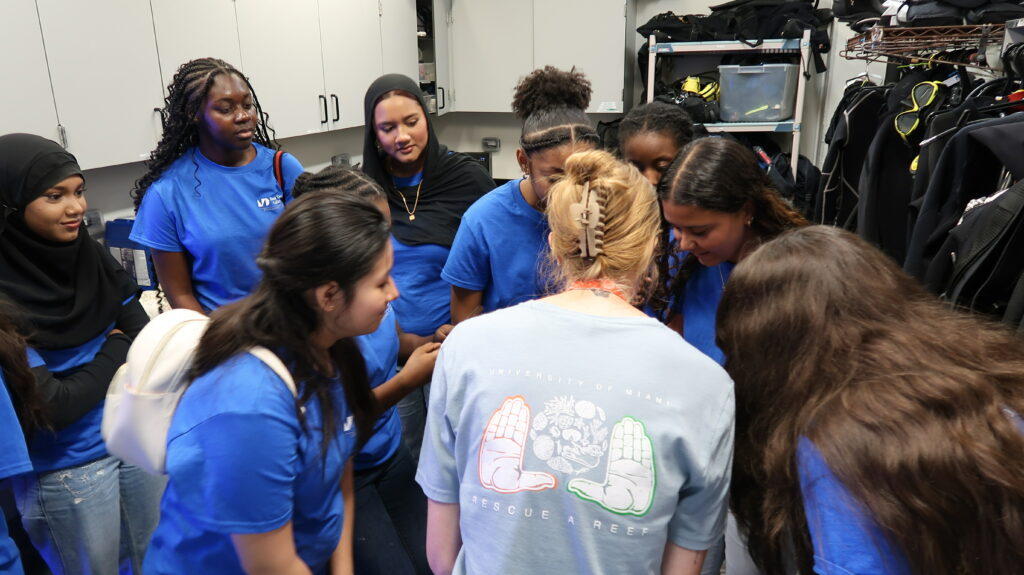
Vision Boards, Salsa, and Financial Literacy
If the morning belongs to science and the midday to mentorship, the afternoon belongs to everything else a young woman navigating high school and looking toward college might need. Afternoon workshops this summer have covered vision boarding, goal setting, time management, entrepreneurship, college preparedness, financial literacy, authorship, mindfulness, mental health, controlling one’s social media brand, artificial intelligence, chemistry, computer science, art studio activities, and dual enrollment pathways — among many others. The program has partnered with EdFed for a multi-session financial literacy series including a simulated Financial Reality Fair.
From 2:30 to 3:30 p.m. each day, physical activity wraps the program. The list of options offered this summer reads like a cultural atlas of Miami: puppy yoga, ballet, line dancing, reggae and dancehall, salsa, soca, calypso, merengue, Tai-Chi, Qigong, volleyball, lacrosse, and self-defense. The breadth is also deliberate. Dr. Madison wants her participants to leave each day having moved their bodies — and having encountered something joyful.
Ten Years, Hundreds of Lives Changed
The Microbiology Girls Club is funded by the Children’s Trust and supported by MDC Homestead’s network of academic and community partners. It is also, in many ways, a direct expression of who Dr. Madison is. A principal investigator on multiple concurrent NSF grants, Vice President of the United Faculty of MDC at the Homestead Campus, director of the NSF-funded ACCESS CUREs HIV Computational Biology Research Program, and founder of the MDC Homestead Campus Garden Club, she has built an ecosystem of programs designed to make science feel like home for students who might never have imagined themselves in a lab.
The downstream results speak for themselves. Program alumni routinely return as dual enrollment students, already fluent in lab culture, already connected to faculty, already confident. Some come back as mentors themselves. The pipeline does not just deliver students to college — it delivers students who already know they belong there.
This summer’s program runs weekdays through July 24, when the final poster presentations and awards luncheon will take place from 10 a.m. to 1:30 p.m. in room F222 at MDC Homestead Campus. The public is not invited to walk in off the street — but 24 young scientists and their families will be there, marking the close of what might be the most quietly remarkable program in South Miami-Dade. Through the support of the 5 year Children’s Trust Youth Development Grant, Dr. Madison is already recruiting for the 11th and 12th annual MGC. Reach out to her at mmadison@mdc.edu for an application.
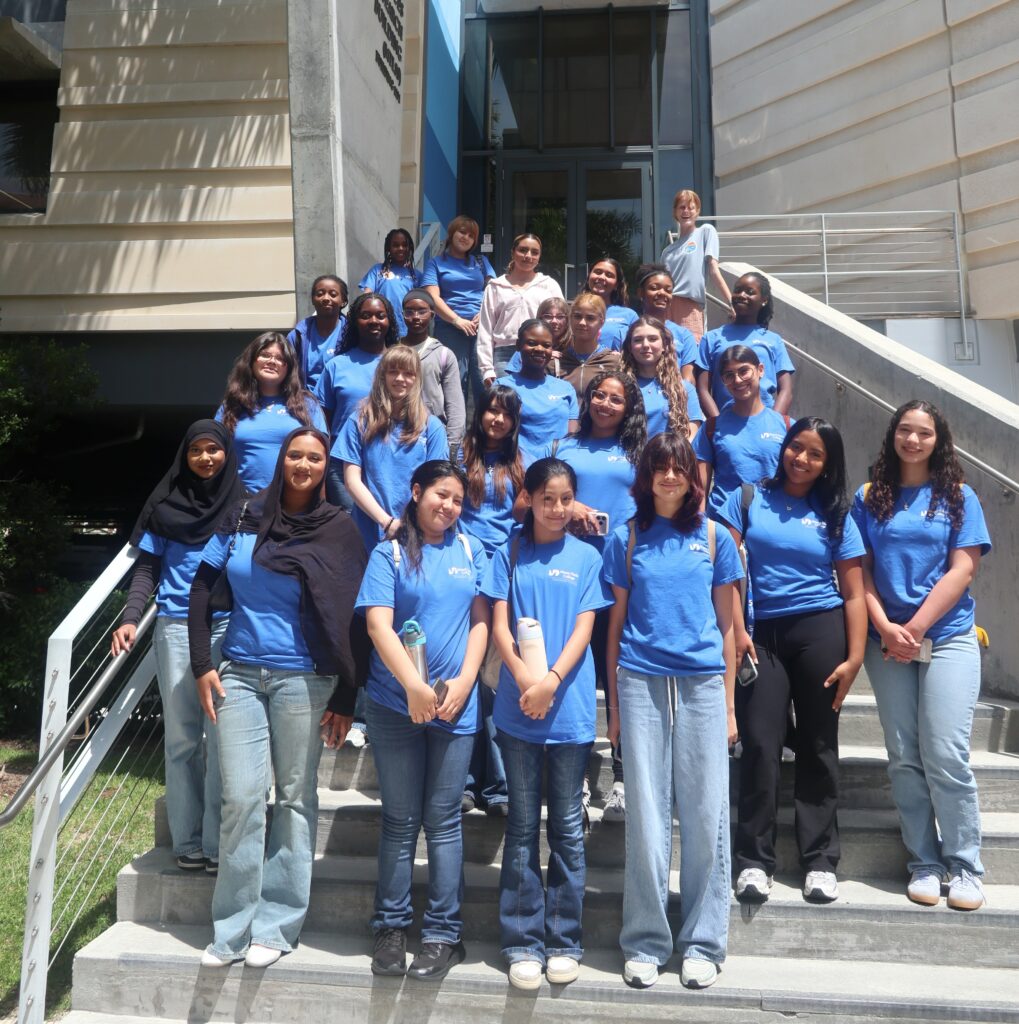
This column was submitted by the Microbiology Girls Club (MGC) Summer Camp program that is now in its 10th year at Miami Dade College’s Homestead campus.
…

- A decade of discovery: MDC Homestead’s Microbiology Girls Club marks 10 years of turning high schoolers into scientists – July 10, 2026
- From Star Trek to the clinic: UM’s 3D bioprinting facility for personalized medicine is engineering molecules for patient implantation – June 28, 2026
- FIU club helps build next generation of aerospace engineers – June 5, 2026