

Ken Griffin’s $2 billion Carnegie Mellon bet is a test of whether America can still build new engines of invention.
By Saif Y. Ishoof, Esq. / Guest Contributor
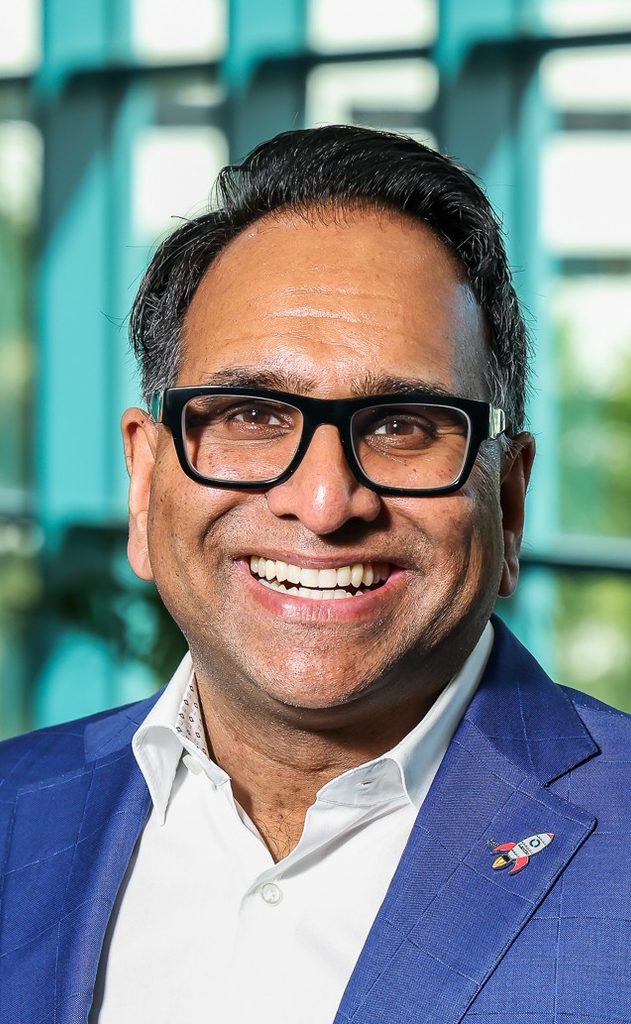
All my adult life, I have listened to people explain what Miami isn’t: serious, technical, capable of building an economy beyond tourism and real estate. Our pleasures are held against us, as though a city that knows how to live can’t also learn how to invent.
Earlier this month, Carnegie Mellon University announced what is the largest individual gift in higher-education history: $3 billion from Ken Griffin, with $2 billion for a campus in Miami’s Wynwood and $1 billion for Pittsburgh.
At the launch, Griffin and the students shared unguarded excitement. Miamians can spot phoniness as fast as a rented Lamborghini on Instagram. This was real.
That moment should matter far beyond Biscayne Bay, because America’s capacity to invent is crowded into a few coastal ZIP Codes, and a nation that concentrates its invention is fragile. Five metros captured over 90% of innovation-sector job growth from 2005 to 2017, Brookings found, and the funnel is tightening: the Bay Area alone took 45% of U.S. seed funding in 2025. As America turns 250, the next 250 years depend on wiring new engines of invention. Miami is the country’s most serious bet.
America’s great innovation centers look inevitable only in retrospect. They began as wagers. Stanford opened on a stock farm; patient decades of scholarship, defense dollars and enterprise produced Hewlett, Packard and Silicon Valley. In 1900 Andrew Carnegie endowed a technical school for Pittsburgh’s working people. The school that became Carnegie Mellon helped Pittsburgh outgrow steel; its roboticists now fill Mill 19, a former steel mill. Carnegie, rich from the age of alloys, built an institution that outlived him. Griffin, rich from the age of algorithms, is expanding the university that bears Carnegie’s name.
The skeptics have a case: satellite campuses rarely transplant ecosystems, and money alone never has. But this is no satellite. Carnegie Mellon plans a 35-acre Wynwood campus for 3,500-plus students and 300 faculty, with Citadel as anchor employer. Nor is this Griffin’s first check: hundreds of millions across Florida, from the University of Miami to Baptist Health to Miami Dade College. He isn’t renting a billboard; he is capitalizing a system.
The harder question is whether discovery travels beyond the campus. Faculty recruited, founders backed, research wired to paying customers: that is what separates an innovation economy from an impressive institution in a city that barely changes. Griffin has company. Northeastern and Babson have opened Miami campuses; Kellogg teaches its executive M.B.A. here. There is no such thing as a region with too much knowledge, production and discovery.
I have seen this community as a young founder, a social-impact CEO at City Year Miami, a higher-education leader at Florida International University, a founding advisor to former Mayor Francis Suarez’s Venture Miami, and today an operating advisor to founders and institutions. At FIU, I watched graduates board planes for Boston and Silicon Valley because the frontier work wasn’t here. Yet I have witnessed firsthand that our region does have cutting-edge faculty and researchers. With UM’s biomedical and marine science, FIU’s research and Miami Dade College’s engine of talent, the newcomers can complete the circuit so the next class stays.
But understand what Griffin is investing in; the skeptics have not run the numbers. Florida’s economy has passed Spain’s to become the 15th largest on earth, at more than $1.7 trillion. Venture investors have noticed: South Florida startups raised $4.13 billion in 2025, up 49% in a single year and a top-10 showing among U.S. metros. The question is no longer whether capital will come. It is whether America will build something serious with it.
Miami is also the one American metro built to face the hemisphere. Its airport is the nation’s No. 1 gateway for international freight and fifth in the world; its customs district moved $144 billion in goods last year. The hemisphere’s commerce already runs through Miami; discoveries can follow. And Miami does not stand alone: with Broward and Palm Beach, it folds into a single economic powerhouse rebranded the Gold Coast. The Florida Council of 100’s new national campaign for the region says it plainly: Ambition Accelerated.
My family arrived 50 years ago, when Miami was a sleepier Southern town pronounced “Miam-uh.” The city that grew around us was an improbable patchwork: the Seminole, who came before us all; families who survived the ghost of Jim Crow; families who fled Castro’s Cuba; Holocaust survivors; diasporas from the Caribbean, Latin America and beyond; and lately Americans weary of other states’ taxes and regulatory environments. Different journeys, one conviction: Life could be made anew. It is the Republic’s founding premise, and nowhere does it run at higher voltage. The nation Miami resembles is not the America of 1976. It is the America of 2076.
Miami is the only place in America where one coffee is ordered for five people: a colada, poured into tiny cups and passed around. We diffuse social capital the same way.
The city has been pronounced dead before: the cocaine-cowboy 1980s, when Time asked “Paradise Lost?”; Hurricane Andrew; the 2008 crash. Every crisis produced another obituary, and the city outlived them all. Our superpower is a population with its foot on the gas, untethered from glory in the rearview mirror. Bravado creates alpha. Ask the rideshare driver who logs 10 hours, then studies for a nursing degree at night.
Miami has no shortage of high-conviction builders. My friend Rony Abovitz graduated from UM engineering and has spent more than two decades building here: Mako, Magic Leap and now SynthBee. Julia Tuttle and Henry Flagler echo in the relentlessness of Melissa Medina, Jaret Davis, Nitin Motwani, Madeline Pumariega: all world-class, all channeling into the 305. I spend my days finding and backing the next generation. When founder friends lament the challenges of building in Miami in 2026, I ask them to imagine my first time, in 2000. Still, I get it; I am committed to removing every barrier I can.
Self-critique is a welcome part of our culture, too. Who are we without laughing at our own absurdities through the Only in Dade lens? None of this is destiny. Miami still prices out too many of its own: housing costs, hours lost to traffic, heat and flooding strain the families any economy depends on. And let me be plain: it is not acceptable for this community to shrug at affordability. Elected, civic and business leadership must tackle it head-on.
What Miami needs now is housing, next-generation transit and labs. Permit laboratories with the urgency Florida reserves for hurricane recovery, let builders build homes working families can afford, and treat transit as the economic infrastructure it is. Investors here should fund prototypes; employers should be first customers for what gets invented down the street.
How will we know it’s working? When a kid from Hialeah can walk from a classroom into a research lab, then into a company of her own, hiring her neighbors. When what Miami invents makes America more productive and more secure.
Miami’s skeptics measure the city in news cycles. Cities are judged in centuries. The capital has already moved. The trade already flows. The talent was always here. In America’s third century, bet against Miami if you like. Just know you are betting against America.
Saif Y. Ishoof is founder and managing partner of Lab22c, Florida’s leading operating advisor.
READ MORE IN REFRESH MIAMI:
- It’s a deal, #MiamiTech! Carnegie Mellon to open a Wynwood campus
- David Blumberg on why Miami’s tech moment is still gaining ground
- Palantir plants its HQ flag in Miami
- Up, up, up: South Florida on way to another strong VC year, PitchBook’s Q3 report shows
- OpenEvidence hits $15B valuation as its ambitions move far beyond medical search
- a16z plants American Dynamism base in West Palm Beach

- America’s next 250 years need Miami – October 19, 2026
- Will Claude’s new AI ‘watermark’ keep us all honest? – October 9, 2026
- Ken Griffin’s message to UM students: Work with AI, don’t fear it – October 9, 2026