

By Nancy Dahlberg and Doreen Hemlock
WIRED chose Miami for its inaugural marquee event, and it didn’t want it to be a traditional tech conference, said Katie Drummond, WIRED’s global editorial director. “Candidly, we think they are mostly very boring. We wanted to create something that felt more like a futuristic carnival, where the stories that we tell at Wired and the technologies that we cover come to life,” she said. “At WIRED, we spend a lot of time thinking about the technologies shaping our reality, the ideas shaping what’s to come, and the extraordinary people building that future.”
That vision became the one-day WIRED World Fair: A Festival of the Future held Wednesday at The Sacred Space in Miami’s Wynwood neighborhood.
The lineup included Clem Delangue, co-founder and CEO of Hugging Face, Alexis Ohanian, founder of Reddit and SevenSevenSix vc firm and owner of women’s sports teams, and Mark Lanier, the trial lawyer who most recently won the nation’s first social media addiction trial.
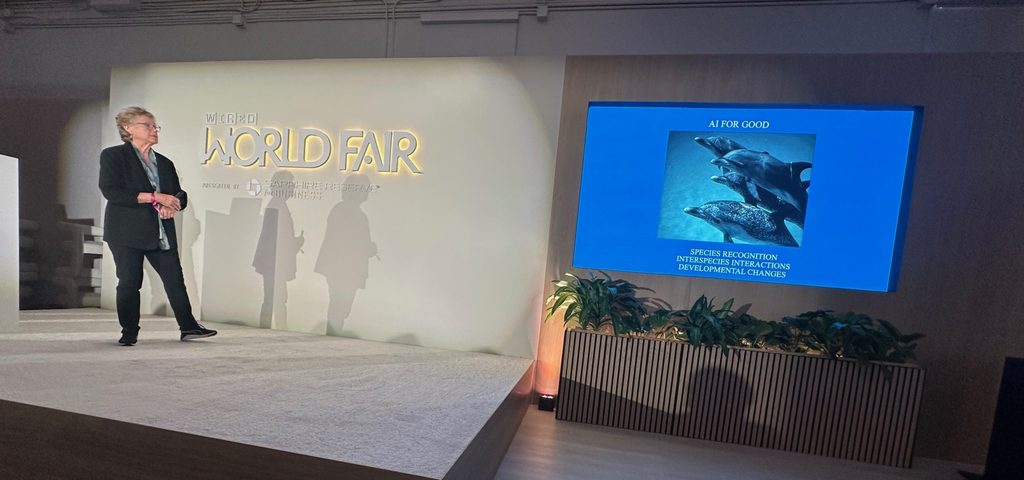
We also heard from Ben Lamm, the co-founder of Colossal Biosciences — his company is attempting to bring extinct species back to life, including the Woolly Mammoth and the Dire Wolf. The work they are doing is about species preservation, at a time when the forecasts say we will lose half our biodiversity in the next 25 years. “The Earth’s pretty great, and I think we can leverage technology in a way that is transformative,” Lamm said. We also heard from Denise Herzing [pictured below], a professor at Florida Atlantic University and founder/research director of the Wild Dolphin Project, has been using AI to decode the language of dolphins based on data she’s been reporting for over 40 years. Her team spends five months every year on a live-aboard observation platform.
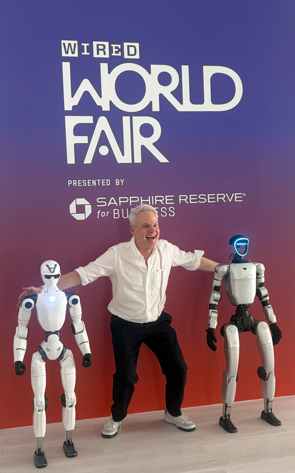
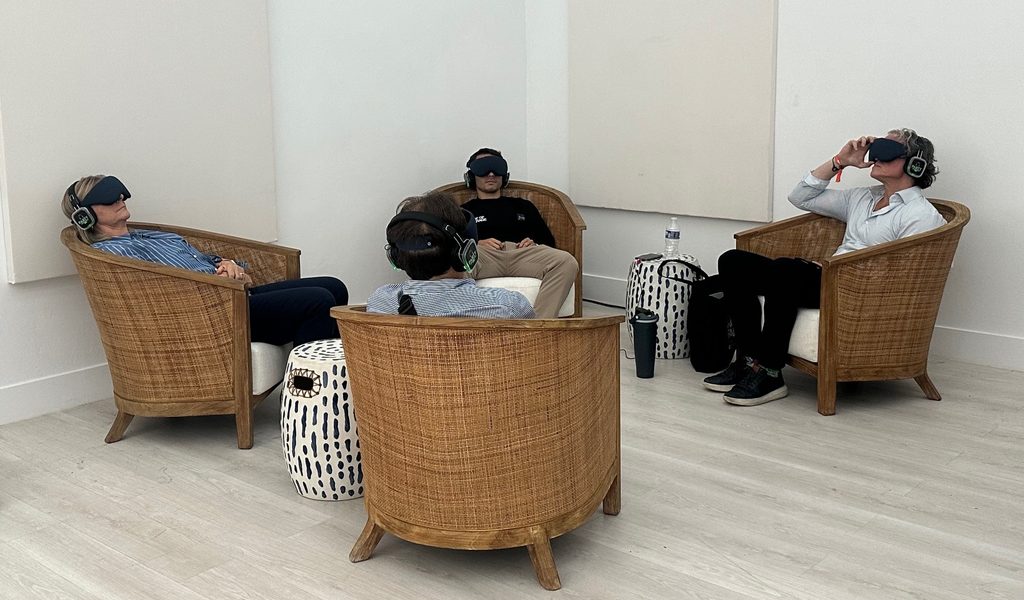
And in the tech entertainment space, attendees listened to a discussion about Blade Runner 2099, the upcoming sequel to one of our most iconic sci-fi movies, and spent a half hour with social media sensation Husk, among others. Participants also got a chance to visit those aforementioned dolphins in virtual reality, interact with humanoid robots, step into NASA’s astronaut training simulator, and contemplate Rafiq Anadol’s AI art, among other highlights. There were after hours events, too, including a screening of the Musk documentary and an evening all about longevity..
All the talks onstage were led by WIRED reporters and editors and included audience questions at the end. Here were a few highlights of the daylong event:
Alexis Ohanian on nextgen user generated content
From Reddit founder to venture capitalist to owner of five women’s sports teams, Ohanian {pictured at the top of this post] brought his perspective to a number of topics including the transformative potential of AI and the rise of compromised user-generated content caused by bots and AI slop. “I’m expecting some better version of the group chat to be the new version of UGC,” said Ohanian, who doesn’t think he as an older millennial with baggage from the pre-Internet world is the one to build it. “I just know some version of UGC has to come back because when it was good, it was really good.”
When it comes to AI safety, he’s not a doomer. “I’m too optimisit to be a doomer. I think there is still a very real chance that this technology can cause a lot of harm for sure. I think we have to be sober about how we’re building and what we’re doing, but I still can’t help but think of all the things that can get so demonstrably better because of it,” he said, noting that AI could revolutionize sectors like biotech and healthcare by leapfrogging entrenched legacy systems.
As for women’s sports, he said growth in emerging sports takes building community, starting with youth pipelines, to create lifelong fans. He’s bullish because unlike traditional sports leagues with aging fanbases, emerging sports attract younger digital-native audiences.
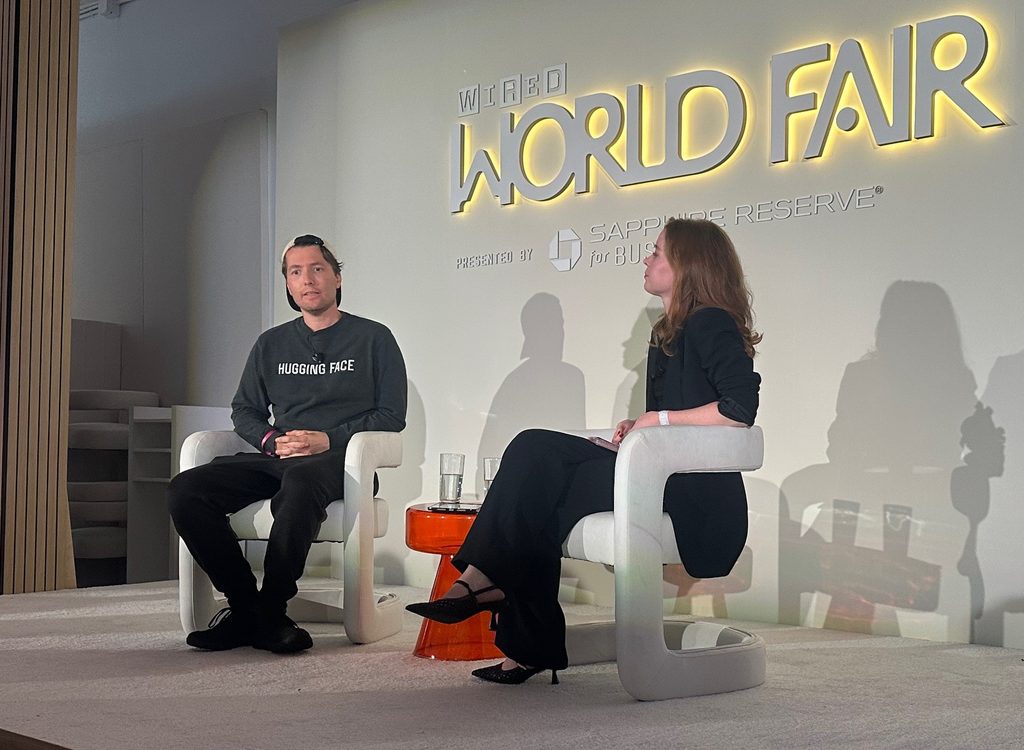
Clem Delangue relects on his big news-making year
Delangue was grilled about Hugging Face’s recent acquisition as well as the recent cyber attack on his company by rogue AI at OpenAI.
Hugging Face recently surpassed 20 million users, Delangue said, marking the strategic importance of open-source AI. “We call them AI builders – it’s basically people trying to build AI themselves, and we empower them to build more, better things, to build frontier things,” said Delangue, who also spoke at Miami AI Summit a couple of weeks ago.
As for the Nvidia acquisition, he noted that Hugging Face previously turned down several acquisition offers including from Nvidia earlier. But now they are joining because Nvidia provides the resources necessary to fight monopolization by the frontier companies. “We felt it was the right time and right home to continue our mission.”
As for the cyber attack, Delangue noted that Hugging Face was the first publicly disclosed victim of an agentic cyber attack, noting that many attacks happen in private labs that no one will ever know about. That’s disclosure that makes him proud, he said.
What the blue wave means for AI data centers
When U.S. voters shifted Tuesday from Republicans to Democrats, part of their anger was directed at the Trump administration’s support of new AI data-centers and Big Tech. Many candidates elected Tuesday want moratoriums on new data centers and tighter regulation of the data-center industry. They seek closer tabs on centers’ use of energy and water, on their emissions, and even bans on developers’ requiring officials to sign non-disclosure agreements to access information on their data-center projects, WIRED senior writer Molly Taft told a session.
“It was such a factor in this election,” Taft told the audience, calling AI data centers “a symbol for a lot of what people are mad about now,” including too many benefits for the few and a lack of transparency. She said incoming governors in Georgia, Texas and Kansas are among leaders seeking AI data-center moratoriums, following the lead of New York’s Kathy Hochul, the first governor to temporarily halt new data-centers.
The question now after the elections, said Taft, is how the data centers will be regulated, leading to “a much more nuanced conversation.”
When Big Tech is on trial
In a wide ranging discussion, litigator Mark Lanier said Meta and other social media companies face more than 10,000 lawsuits related to their platforms. His own legal strategy targets features like infinite school, auto-play and comment sections that are purposefully designed to maximize engagement and profit. His legal team secured the first victory against Meta by proving that features were intentionally designed to be addictive. He said internal documents from Google have suggested that a goal was addiction using “casino science” and intermittent variable rewards to increase viewership.
While questions remain regarding whether AI can be held liable to autonomous actions, he compared this to a dog bite case where the owner remains responsible for their pet’s actions. And while Mega and YouTube have implementsd safety tools, true accountability will come through the courts and public pressure, he said.
And about those 10,000 lawsuits? He predicted that significant litigation will take two to five years to move through the legal system.
Laughing at AI absurdities
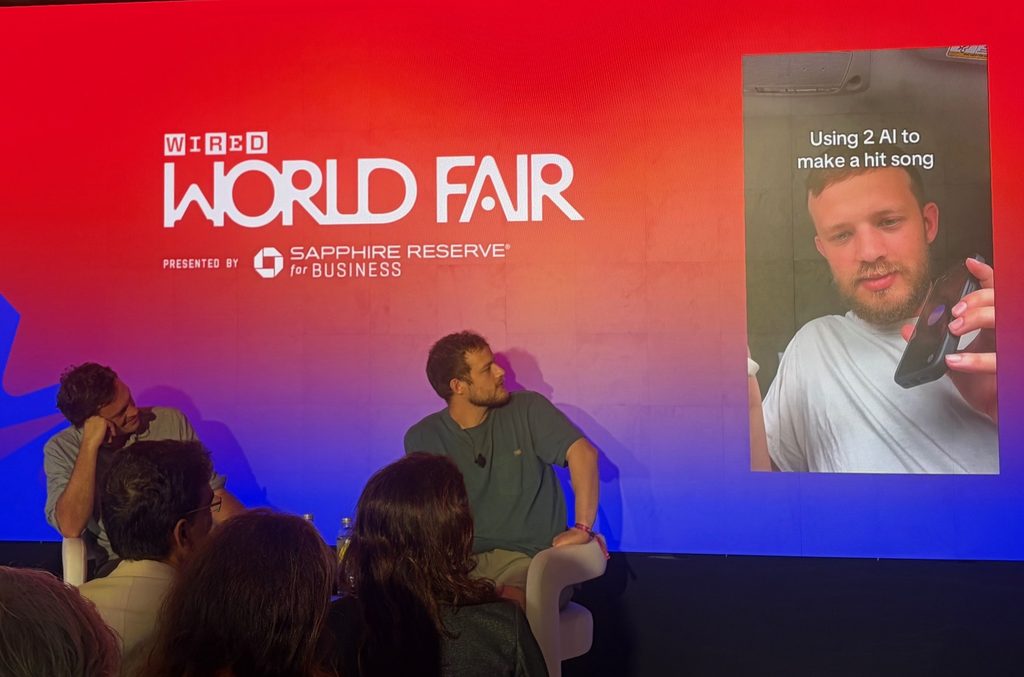
Among the best attended sessions at the WIRED event was a talk with social-media sensation Husk, who satirizes AI in unscripted videos he posts on TikTok, Instagram and YouTube.
In the videos, Husk – who does not share his real name – asks ChatGPT questions and then, shares AI’s absurd responses, including a hilarious dialogue on the number of E’s in the word seventeen. He always keeps a straight face, even as the weird AI answers are spoken.
“Double letters really trip them up,” he told a standing-room crowd topping 70 people in the Container room of The Sacred Space venue. Husk said he’s surprised how the videos have gained viewers, adding “I never thought these would be played in front of an audience.”
More scenes from WIRED World Fair
This story was updated.
READ MORE IN REFRESH MIAMI
- At inaugural WIRED World Fair, tech takes the stage and experiences bring it to life – November 5, 2026
- For SMBs that need quick access to capital, Bizcap raises a $175M credit facility to expand its solution for that – November 2, 2026
- 6+ things to know in #MiamiTech: AMPERA takes on prestigious partner, Thrive Holdings acquires ADT, plus news from Zeo Scientifix, World Strategic Forum, MIA, job opportunities & more – October 30, 2026



