

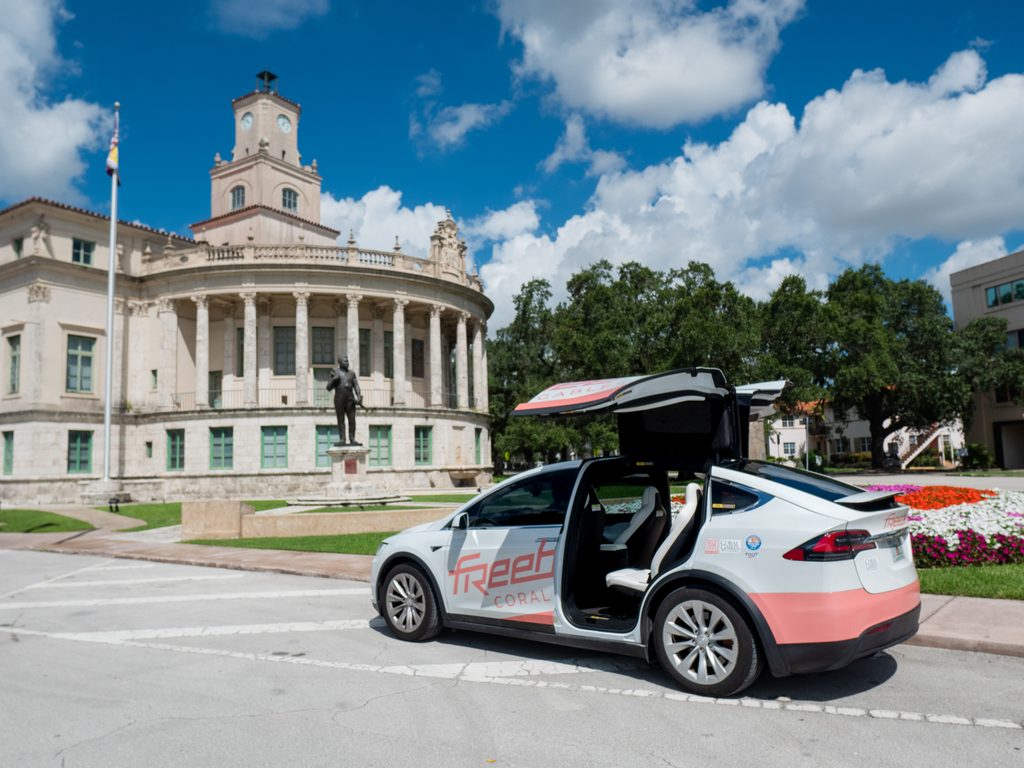
Freebee’s journey started in 2012 with two University of Miami friends, six electric vehicles, and an idea: Let’s make it easier and more fun to get around Miami Beach. Fast forward to this year Freebee has more than 300 electric vehicles serving more than 50 municipalities, campuses and business districts throughout South Florida and beyond. Over the years, the Miami-based startup grew to deliver more than 2 million rides in 2025 and was on track to exceed that number this year.
But we didn’t see this turn of events coming.
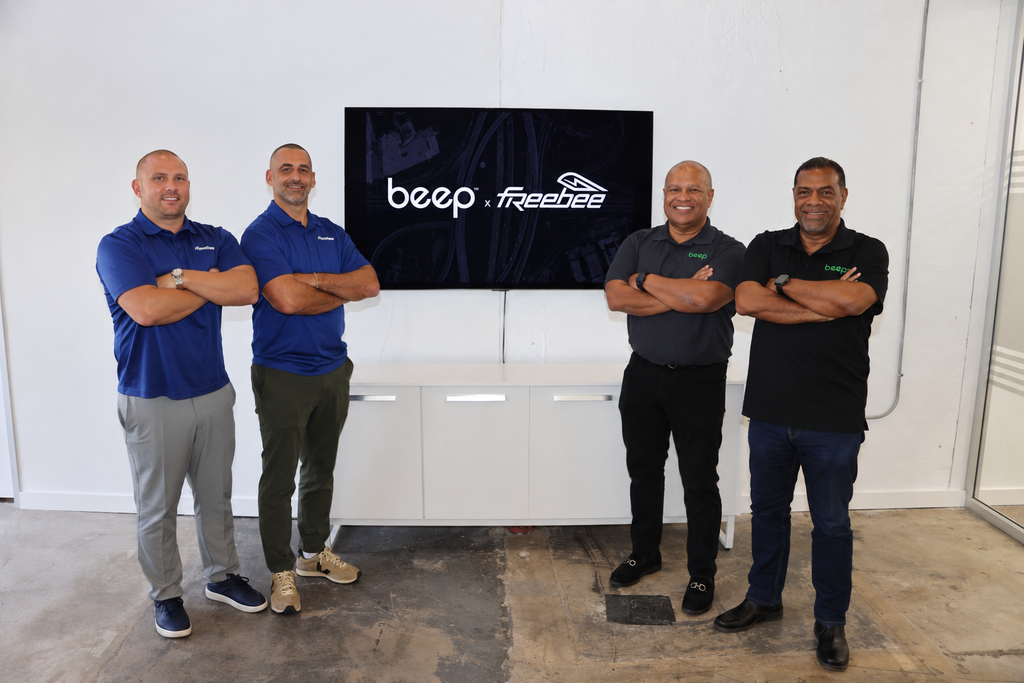
Freebee, co-founded by Jason Spiegel and Kris Kimball, has merged with Beep, an Orlando-area autonomous mobility company, in a deal announced today that combines two different approaches to the future of transportation. Freebee brings a large-scale, human-driven microtransit operation. Beep brings autonomous vehicles, its AI-driven AutonomOS software platform and years of experience managing autonomous transportation networks.
“Joined by Freebee, Beep is now among the largest microtransit providers in the country, offering 50 new communities and more than 2 million annual riders access to our full-stack platform that integrates human-driven and autonomous transit services into a single, flexible offering,” said Kevin Reid, co-founder of Beep, in a statement. “This transaction accelerates the industry’s journey to autonomous mobility, giving communities the ability to implement meaningful services today while giving people the flexibility to choose between human-driven, autonomous or blended transportation solutions.”
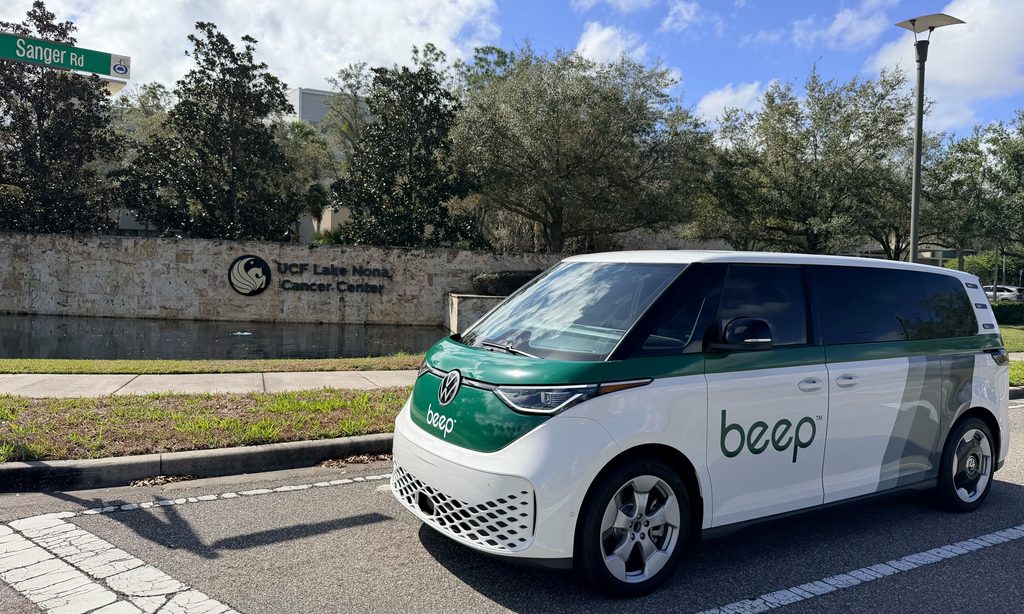
The companies will operate under the Beep name, but fear not, Freebee fans: Freebee’s name will live on. Its microtransit services will continue to operate under the Freebee brand. Their HQ will be Beep’s current base in Lake Nona.
“Freebee was built around a simple belief that transportation should do more than move people: it should strengthen communities, expand access and improve quality of life,” added Spiegel. “Bringing Freebee and Beep together creates a company capable of delivering future-proof mobility solutions. I’m incredibly proud of what our team has built and excited to offer customers a more comprehensive mobility platform.”
The merged company will be led by Beep co-founder Kevin Reid as chairman and chief executive officer, while Freebee’s co-founders will join the executive team. Spiegel will be president and chief growth officer and Kimball will be COO. Beep co-founder Mark Reid will serve as chief customer officer.
For Spiegel and Kimball, the transaction represents the latest turn in a journey that began when the two met as University of Miami freshmen. In the early 2010s, the two friends were looking for something more exciting than the jobs they had taken after college. At the same time, they were watching people struggle to get around Miami Beach, where taxi rides could mean long waits.
They launched Freebee in 2012 with electric vehicles outfitted with big speakers, neon lighting and advertising wraps. The rides were free to passengers, with advertisers paying the bills. The micro-transit concept would became part of the Miami landscape, but with a change in the business model that brought on the massive growth.
In 2017, Key Biscayne community leaders approached Freebee about helping solve traffic, parking and mobility problems. Instead of relying primarily on advertisers, the company could be paid by a municipality to provide transportation. Then Freebee began signing contracts with communities across South Florida and eventually expanded beyond the region. Its on-demand service offered something traditional fixed-route buses often could not: riders could request a vehicle through an app and be picked up where they were headed directly to where they wanted to go.
The new model proved to be the path forward but still on track with the original mission: “People want convenience. They want to get picked up where they’re at and driven directly to where they need to go,” said Spiegel, in Florida Trend recently. “It’s really about providing this service to as many communities as we can and improving their quality of life.”
The fleet grew, including Teslas and Volkswagen ID Buzz minivans. In recent years, Freebee expanded to a team of about 500 people and served metro areas around Florida and recently began expanding to other states too.
In Central Florida’s Seminole County, Freebee’s SCOUT service grew into one of the country’s largest microtransit systems, with 42 vehicles covering roughly 190 square miles in five zones. The operation was carrying more than 30,000 riders a month as of this summer.
In an earlier interview this year, the Freebee co-founders told me adding autonomous functionality was in their roadmap, and now they are part of a company that is all about that.
Beep says the combined organization will serve more than 60 communities and employ nearly 1,000 people. Together the two companies have carried more than 10 million riders. Its strategy is not to immediately replace Freebee’s human-driven service with autonomous vehicles. Instead, the companies say communities will be able to choose among human-driven, autonomous or blended transportation networks. This month, Beep closed a Series B led by Mobileye and has raised $130 million to date.
For Freebee, meanwhile, the deal marks the end of its run as an independent company but not the end of Freebee’s service or its mission. As the next phase unfolds, Freebee’s technology, people, municipal relationships and operating experience become part of a larger mobility platform, and the beloved Miami-born brand lives on.
READ MORE IN REFRESH MIAMI:
- Freebee accelerates growth across Florida, eyes major national expansion
- WellStack acquires DeLorean AI, plans to grow platform and South Florida footprint
- Tokenization to get its Wall Street moment as Miami’s Securitize goes public

- Beep, beep: Freebee and Beep are merging. Here are the details. – September 16, 2026
- 8+ things to know in #MiamiTech: News from BRiC, Related Ross, WeWork, GBI, Brightline, The Source & more – September 14, 2026
- a16z plants American Dynamism base in West Palm Beach – September 10, 2026