

Jensen Huang’s abrupt exit left Nvidia without a clear successor. Here’s why making yourself “indispensable” puts your company at risk—and how Warren Buffett avoided the same trap.
EXPERT OPINION BY SOREN KAPLAN, WSJ BESTSELLING AUTHOR, KEYNOTE SPEAKER, AND LEADERSHIP STRATEGY ADVISOR
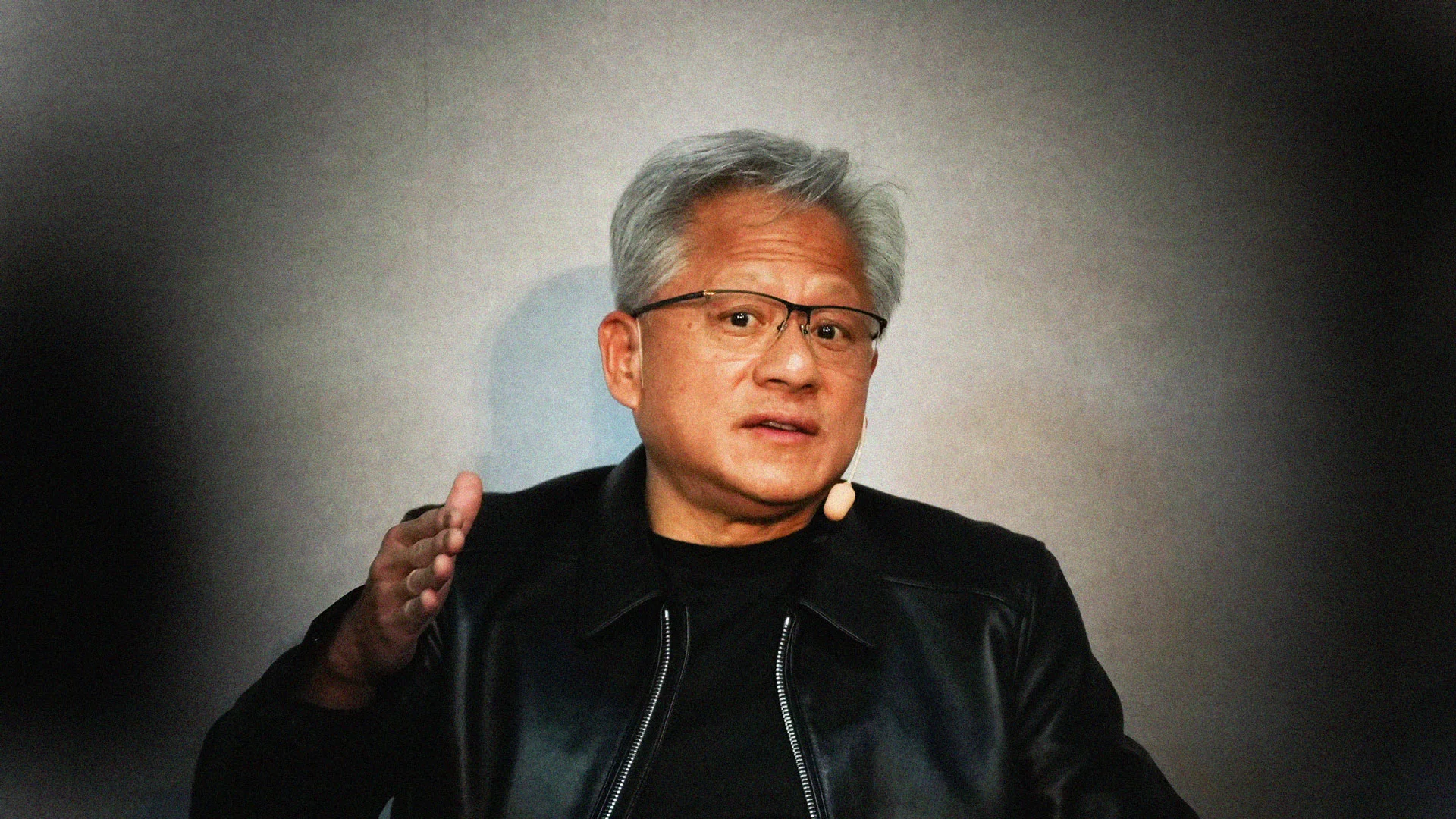
Jensen Huang. Photo: Getty Images
Listen to this ArticleMore info
0:00 / 0:00
Most of us like to think people need us—that we deliver so much value things might grind to a halt without us. But do you actually know what would happen if you didn’t show up to work for the next three months? Last week, Nvidia got their answer to that question.
On November 12, the company announced that co-founder Jensen Huang had stepped down as CEO after 33 years. His resignation came after reports of extramarital affairs and questionable dealings with a company that may have been funneling Nvidia’s chips to China.
Any time a CEO leaves, a certain level of disruption is expected. But Jensen Huang’s departure exposed a bigger problem for the business: One of the world’s most valuable companies had no clear choice for a successor.
Nvidia was built around one person
Huang took an unusual approach to running Nvidia. In a 2024 interview, he told podcaster Lex Fridman that his direct staff included 60 people.

This Morning
The daily digest for entrepreneurs and business leaders
Featured Video
An Inc.com Featured Presentation
That setup likely kept him involved in every major decision and meant that very few of his executives actually ran a large part of the company on their own. And that’s the kind of broad-based experience boards look for in a future CEO.
So was anyone being groomed to eventually take Huang’s place? Unclear. He has said that ideally any of those 60 direct reports could take over and that he was “hoping that the next CEO of the company’s already at the company.” But that’s a pretty passive approach to an important CEO responsibility—something Nvidia’s board should have (and may have) flagged as a risk.
If neither of those things happened, Nvidia wouldn’t be unique in its misstep. In a study of 2025 succession trends released this year, Korn Ferry found that “many boards still lack the rigor, visibility, and ongoing involvement required for effective succession governance,” and that 1 in 4 boards weren’t ready for a CEO transition.
The problem with “indispensability”
I’ve seen this pattern in the organizations I’ve worked with, and I’ve fallen into it too. Becoming indispensable feels good. We make ourselves indispensable because it’s validating to feel needed.
It’s also a trap.
In a series of experiments, psychologists Jon Maner and Nicole Mead had participants lead small groups as they worked on tasks. Most leaders did what was best for their group. Leaders with a strong desire to stay in control kept useful information to themselves and left out the group’s most skilled member when they felt their leadership position was threatened. They protected their own standing at the group’s expense.
You don’t need 60 direct reports to run into an indispensability problem. It happens in less obvious ways in many businesses.
Think of the founder who still approves every hire even when the company has 200 employees. Or the sales leader who handles the five biggest client relationships alone and never takes anyone else to those meetings. Or the finance manager who’s the only one who knows how the billing system works.
There’s also the manager who never takes a proper vacation and the team that puts off decisions until the manager returns. Each example looks like dedication, yet relying on one person leaves the business vulnerable.
Of course, not every leader does this.
Berkshire Hathaway reveals the alternative
Solid leadership is about letting go of control by empowering others.
Compare Nvidia to Berkshire Hathaway. Warren Buffett led the firm for six decades, and on the surface, he seemed as indispensable as any other CEO in America. (Just look at all the Inc.com articles celebrating his leadership.)
But Buffett actually saw getting his replacement ready as part of his job, and spent years helping the company rely less and less on him.
In 2018, Greg Abel became vice chairman in charge of Berkshire’s businesses outside insurance. In 2021, Buffett confirmed publicly that the board had chosen Abel to take over as CEO. This past January, Abel became CEO with Buffett remaining chairman.
Make yourself dispensable
How well your organization runs without you may be the best way to judge your leadership. And there are three key ways to do that now.
Begin by looking for leadership bottlenecks. Identify which decisions, relationships, and systems depend on just one person, including you. Then choose a backup. For each one, pick someone to learn the topic, giving them both formal and informal insights about how things really work over a 90-day period. Finally, step back. When those 90 days are up, give that person real decision-making authority to lead that topic. Rinse and repeat.
Soren Kaplan helps leaders focus on what matters so they can make better strategic decisions. Subscribe to his Leapfrogging the Headlines newsletter for more insights and ideas.
The opinions expressed here by Inc.com columnists are their own, not those of Inc.com.
Get Inc.’s free CPG newsletter, Packaged Goods, for the latest on the founders, investors, and trends reshaping consumer brands.



