

Why your most talented toxic employee is the most expensive person on your payroll, and how to decide whether to fix them or let them go.
Some of the brightest objects in the universe are powered by black holes. A quasar can outshine an entire galaxy of hundreds of billions of stars. Yet the black hole at its center gives off no light at all. The glow comes from everything around it: gas, dust, whole stars, heated to millions of degrees as they are pulled in and torn apart.
From far away, it looks like the most powerful thing in the sky. Up close, it is a place where energy goes to disappear.
Most businesses I know have one of these. Sometimes it’s the person with the best numbers on the team. Sometimes it’s the smartest person in the room, the one everyone says has “so much potential.” And almost always, it’s the person the founder is protecting.
I know this because I hired one.
Years ago, I nearly destroyed my own business with a single hire. He was a very intelligent man. He was also a relative of my wife, and he had no job. I hired him out of pity. I didn’t do my research. I didn’t check his background, and I didn’t learn until much later that he was struggling with alcohol addiction.
Within the first year, I knew he wasn’t right for the job. Deadlines slipped. He didn’t want to learn anything new. Work that was supposed to leave my desk kept coming back to it, and I ended up doing his job on top of mine.
And I kept paying his salary. For three years.
So if parts of this article feel harsh, understand that most of the harshness is aimed at me first. I’m writing the letter I wish someone had sent me in year one.
By the end, you’ll have a clear way to see what your black hole hire is really costing you, why you haven’t acted yet, and a 30-day protocol to make the call, whichever way it goes. Read it with one specific person in mind. You probably already know who.
What does toxic actually look like?
When we hear “toxic employee,” we picture the extreme cases. Harassment. Fraud. Violence. Those are real, and they are the easy decisions, because the law and your own policies usually make them for you.
The hard cases are the quietest. Simply, toxicity has a second level, and that’s where most of the damage happens:
- The colleague who turns every meeting into a confrontation.
- The person who ignores how the team is organized because the rules “don’t apply” to them.
- The one who makes others uncomfortable, slowly, in ways nobody wants to report.
- The one who misses deadlines, refuses to learn, and lets everyone else quietly absorb the gap.
That last one always catches people out. We tend to reserve the word toxic for the aggressive type. You can have a perfectly polite, intelligent, even pleasant person and they can still be toxic in the same way. They take in your energy and give back less than they take.
That’s my working definition. A black hole hire is anyone whose presence costs the system more energy than they return, and who keeps their place because someone with power protects them.
Two faces of the same problem
The black hole comes in two versions.
The first is the brilliant jerk. Talented, confident, often your top performer. They bring in clients, close deals, write the best code. And because they produce, they get the best opportunities, the special treatment, the benefit of every doubt. Their behavior gets filed under “the price of talent.”
Some companies tolerate them. For us, the cost to effective teamwork is too high.
Reed Hastings
The second is the protected one. The friend, the family member, the person you’ve actually hired to help them out. The one with the potential that simply doesn’t manifest. Their numbers aren’t striking, but they’re absolutely protected as they’re in a position that you can’t afford to lose.
Different faces. Same physics. Both bend the space around them, and everyone else on the team quietly adjusts their orbit.
A star gives off its own light. A black hole makes everything near it glow while it consumes them.
Here’s the uncomfortable part. Most founders with a black hole hire already know. Maybe not in words, maybe not out loud, but they know. So the real question is why nothing changes.
There are three layers, each one sitting deeper than the one before.
You keep them because you’re afraid of the gap
On the surface it’s maths. “If I just let them go, who’s going to bring in those clients? Who’s going to do that work?“
The brilliant jerk looks irreplaceable on a spreadsheet. The protected one looks cheaper to keep than the drama of letting them go.
This fear feels rational. It is also built on a number you have never actually calculated, as you’ll see in a minute.
You keep them because you want to be the one who saves them
One layer down, it’s identity.
Many founders carry a quiet savior complex. We believe that the right environment, enough patience, or one more chance will turn this person around. When I first wrote about this topic years ago, I named three of the most common reasons businesses keep people they shouldn’t: guilt, a culture of drama, and the savior complex.
I lived all three, but the savior complex ran the show. I hired out of pity and kept him out of pity.
Every month I didn’t act, I told myself I was being generous. What I was really protecting was my image of myself as a good person, and the business paid the bill.
Compassion is a virtue. Compassion that ignores everyone else who depends on your business becomes a decision to let them pay for your comfort.
You keep them because the conversation is harder than the cost
The deepest layer is the simplest.
The conversation is painful and the cost is all over the place. The pain of one difficult conversation is concentrated in a single afternoon. The cost of not having that conversation is spread out over hundreds of tiny moments – a missed deadline here, a weekend’s worth of rework there, a good employee just going quiet in a meeting.
Concentrated pain always appears to be bigger than distributed cost. That’s why it wins. That’s precisely why the cost has to be made visible.
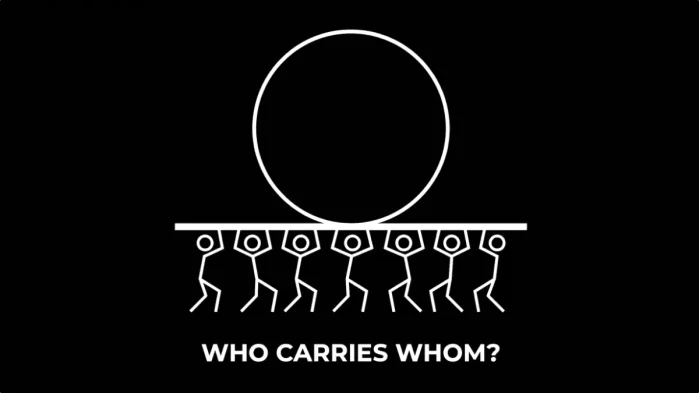
Here’s the belief that keeps black hole hires in place: “This person is carrying the team.”
Now flip it. In most cases, the team is carrying them.
The math that never shows up on your P&L
In 2015, Michael Housman and Dylan Minor published a Harvard Business School working paper called “Toxic Workers.” They analyzed data on more than 58,000 workers and defined toxicity strictly: people who were eventually fired for serious misconduct.
The result is the key number in the article. A superstar from the top 1% of performers added around $5,303. Avoiding a single toxic worker saved around $12,489 (almost all of that being in turnover costs for the people who left as a result of the toxic worker). The researchers refer to that as a lower bound as it doesn’t take into account litigation, the damage to morale or the slower rate of productivity of every replacement that you end up having to hire.
Read that again. Avoiding one toxic person is worth more than twice as much as finding a superstar.
Founders also tend to miss another detail. The toxic workers in the study were often more productive in quantity. Their quality, though, was lower. So the very signal that makes you protect them, “look at their output,” is the signal that misleads you.
Older research points the same way. A 2008 study commissioned by CPP estimated that workplace conflict cost U.S. employers around $359 billion a year in time lost to dealing with it. The numbers change from study to study. The direction doesn’t.
The quiet exit
The actual cost rarely comes as a single event. It comes as a pattern.
Imagine a weekly meeting run by the person that no one wants to work for. They’re arrogant, they’re harsh and they’re never in any way accountable. The first thing that happens is that people stop speaking. Then they start to find all sorts of reasons not to attend. The meeting is still on the calendar, it’s still there, but it’s not doing anything.
Then comes the part you can’t see from your desk. Your best people leave first. They have options, and talented people who want a healthy place to work won’t tolerate this for long, nor should they. The people who stay are often the ones with nowhere else to go.
If you have the right people on the bus, the problem of how to motivate and manage people largely goes away.
Jim Collins
If you’ve got the black hole and lost the team around it, what have you actually protected?
Output density, measured at the system level
In my own work, I talk a lot about output density (i.e. how much actually gets into someone else’s hands relative to the energy it took to produce it).
A black hole hire utterly destroys output density for the entire system. Their personal stats might be okay, might even be acceptable. Look at the team as a whole though and it’s all over the place. Hours lost to conflict, hours lost to rework that someone else just quietly eats up, decisions getting pushed back because no-one wants to be the one to pick up the pieces.
In my case, the cost had a name. It was me. I was the one doing his job. Every hour I spent finishing his work was an hour I didn’t spend building the business.
I call this the Invisible Tax: what you pay when a recurring, systemic problem gets treated with raw human effort instead of a decision. You pay it every week, and it never appears as a line item.
The damage doesn’t stay inside your walls.
What customers feel before you do
Customers rarely see the conflict in your office. But they feel it.
They feel the missed deadline, the defensive email, the account manager who is clearly exhausted from covering for someone else. Customers don’t need to know why the experience got worse. They simply leave.
Your hiring brand
Candidates talk. Ex-employees write reviews. In such a small industry you know someone who’s worked for you. A black hole hire can quietly turn your company into ‘that place’ and the next great person you’re trying to hire will have heard about it before they even apply.
I often describe business through what I call the A.R.T. of Business: Attention, Reputation, and Trust.
Attention is the easiest to get, because you can buy it. Reputation is harder, because other people define it. Trust is the ultimate economic driver, and it takes years to build.
A single black hole hire can drain the last two while you’re busy paying for the first.
Culture is whatever you tolerate
In physics, entropy is the tendency of any system to drift toward disorder unless fresh energy goes in to maintain it. Your culture obeys the same law.
You can simply write your values on the wall. You can also run offsites. However, your team will still learn what you actually value by watching what you tolerate. If there is only one person who misses deadlines, mistreats colleagues, or refuses to grow without consequences, everyone learns the real standard.
The standard you walk past is the standard you accept.
David Morrison
And standards only drift one way when nobody holds them.
The Harvard researchers found something that makes this worse: toxic behavior spreads. Coworkers exposed to a toxic worker became more likely to turn toxic themselves. Minor’s advice to managers was blunt: “They’ve been potentially contaminated. Put the yellow suit on.”
A black hole doesn’t remain the same size. It grows by what it pulls in.
Founder A vs. Founder B
Imagine two founders with the exact same problem.
Founder A decides to wait “one more quarter”. Then another. Over the next 12 months two solid staff members walk away. The founder starts working evenings to cover the gaps. A key client complains twice. The meetings get shorter and quieter. The problem person is still there and the founder has now in effect taught the whole team that nothing ever changes.
Founder B takes the hard month. She documents the behaviour, has the conversation, gives a clear path with a deadline and then acts when the deadline has passed. It’s a painful month. Twelve months on and one seat is weaker, all the others are stronger. People are speaking up in meetings again. She’s back to working on the business rather than in someone else’s job.
I was Founder A for three years. I don’t recommend it.
Everything up to here was the why. Now for the how.
Give yourself 30 days. Some cases take longer to fully resolve, but a deadline is what turns a feeling into a decision. Without one, you’ll do what I did: wait, hope, and keep paying.
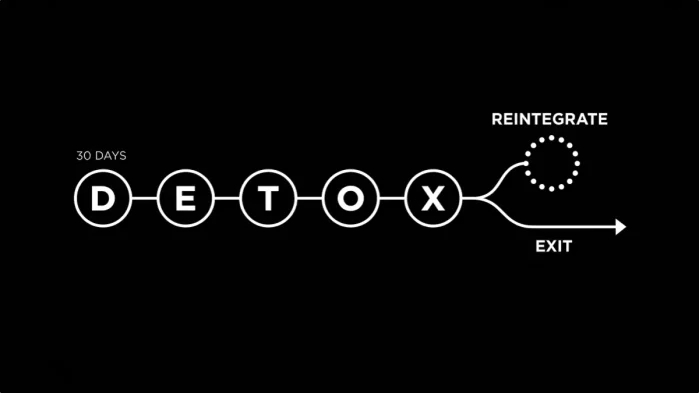
D: Diagnose behavior, not personality
Write down the specific incidents. Give dates. What actually happened? Who was it that was affected? “He’s difficult” or “she has a bad attitude” is a judgement and judgements are liable to invite argument. “Missed the client deadline on the 3rd, the 12th and the 20th” is evidence.
This step also protects you from your own bias. Sometimes, once it’s on paper, the pattern turns out smaller than it felt. More often, it’s much bigger than you were willing to admit.
E: Estimate the Invisible Tax
Now put rough numbers on the cost. You don’t need precision. You need visibility. Ask yourself:
- How many hours a week do I or anyone else end up spending fixing, redoing or covering for this person’s work?
- Who’s left, or gone quiet since this person has joined?
- Which meetings, projects, or clients have gotten worse?
- What would I do with those hours if I got them back?
Then write an anti-vision. Describe an average Tuesday in your business twelve months from now if nothing changes. Be specific. Who is still there? Who left? What are you doing at 10 p.m.?
A pleasant vision motivates weakly. A clear picture of the future you refuse to live in motivates far more.
T: Talk directly
Most black hole hires have never received a clear, direct conversation. They’ve received hints, sighs, and quiet workarounds. That part is on us.
Keep the conversation simple:
- The standard: “That’s what the job requires.”
- The examples: “Here is what happened and when”.
- The impact: “This is what it costs the team, our clients and the business.”
Then just stop talking and listen. There can be something you didn’t know. In my case there was a serious personal struggle lurking underneath the performance issue. Addiction is a health issue and it needs compassion and real support including professional help.
What it can’t become is the reason everyone else in the business carries the load indefinitely. You can care deeply about a person and still hold the line on the role.
O: Offer one clear path
End the conversation with one clear path. Define:
- What specifically must change.
- By when, with an actual date.
- What support you’ll provide along the way.
- What happens if it doesn’t change?
Put it in writing. A clear path is the fairest thing you can give someone (as it removes the element of guessing) and it’s the fairest thing you can give yourself (as it removes the excuse).
X: Exit or reintegrate cleanly
When the deadline comes, act on what you see rather than what you’d have liked to see.
If they’ve genuinely changed then bring them back in. Reset the relationship, recognize the change and stop viewing them as a project.
If they don’t then exit with dignity and speed. Be respectful, be legal, be clear. Then go straight to your team and tell them what you can. Take ownership of how long it’s taken and ask them what they need. You’ll often find out just how much they were carrying once the weight is off.
The point of the protocol is simple: one person’s orbit should never decide where everyone else goes.
Go back to that quasar. From far away, it’s the brightest thing in the sky. You’d swear it was the source of all that energy.
But the black hole never produced the light. Everything around it did, on its way in.
Look at your team with that in mind. Find the people who are glowing, and ask what’s pulling on them. Then do the thing I waited three years to do.



