

Suppose the long-term plan that you’ve been refining for months is the very thing that is preventing you from making progress.
It has the air of responsibility and seems mature. You sit down and plan out five years ahead of you, make a spreadsheet with different colors for each phase, and then leave feeling as though you’ve achieved something.
But here is the question nobody asks: what did you actually produce?
You produced a document, a concept. Something with the theoretical power to make millions of dollars, but a value of exactly zero the moment you close the laptop.
The plan usually felt like progress. However, it is motion, not action.
Let me ask you something directly. When was the last time a 5-year plan survived eighteen months of contact with reality?
The market shifts. Technology rewrites the rules. Your customers change their minds. You change your mind.
The person who wrote that plan eighteen months ago had different information, different assumptions, and a different understanding of the problem.
No business plan survives first contact with customers.
Steve Blank
Clinging to their blueprint is like navigating with a map drawn by someone who has never been to your destination.
And yet we treat long-term planning as if it were the mature, responsible thing to do. We nod when someone says, “You need a plan.” We feel guilty when we don’t have one.
The plan becomes a comfort blanket. It soothes the anxiety of uncertainty without actually reducing it. You feel prepared. But you are not prepared. You are just calmer about being unprepared.
Peter Drucker said it decades ago: “The best way to predict the future is to create it.”
Notice he said create, not plan. There is a world of difference between the two.
Planning is an intellectual exercise.
Creation requires your hands. It requires shipping something real into the world and seeing what comes back.
Here is what I have learned the hard way: the safe path, the one with the detailed roadmap and the quarterly milestones and the five-year exit strategy, is the real risk.
Why?
Because while you were planning, the world moved. And you were standing still, feeling productive about it.
There is a myth buried deep in how we think about careers and businesses.
The myth says you are an architect. You draw the strategy and plan first, then you build according to what you put there.
The strategy and plan come first; the building follows. The plan is the source. The execution is the consequence of the plan.
This sounds reasonable. However, it is also almost never how anything actually works.
Most careers are not designed. They emerge. They take shape through a series of local decisions, each one made with incomplete information, each one revealing the next option that couldn’t have been seen from the starting line.
You take a step, the view changes, you take another step. The path only makes sense in retrospect.
You can only see as far as your headlights, but you can make the whole trip that way.
E.L. Doctorow
From the inside, it feels like stumbling. From the outside, years later, it looks like it was planned all along.
The difference between people who build something meaningful and people who spend years “getting ready to start” is rarely talent or resources. It is their relationship with uncertainty.
The planners wait for the fog to clear before they move. The builders move, and the fog clears because they moved.
Take a moment to think about your own experience. Consider the opportunity you had that was the best one—you know, the one which changed everything. Was it something that came as a result of your plan or did it arise from a casual conversation, an unexpected email, or a project to which you said yes on the spot?
Most people, when they answer honestly, discover that the pivotal moments of their career were the ones they never planned for.
The plan never contained the breakthrough. The plan contained the comfortable steps. And the breakthrough came from the step that wasn’t on any plan.
I learned this through failure. Expensive, painful, avoidable failure.
A few years ago, I found myself chasing three completely different visions simultaneously.
Three visions pulling in three directions, three sets of fantasy benefits I was calculating instead of doing the work in front of me.
That is a lot of energy expenditure. It is like trying to drive three cars at once. You don’t move forward; you just strip the gears. And the return on investment was exactly what you’d expect: a lot of burnout and a body of work that added up to nothing because it was pointed in three directions at once.
That experience is what led me to what I call the Staircase Strategy.
The idea is simple. First, you are allowed to have three visions, but if they are not in a staircase order, you will burn out.
When you have vision one that, after achieving, will help you to work on vision two, and vision two will help you to work on vision three, then you are on the right track.
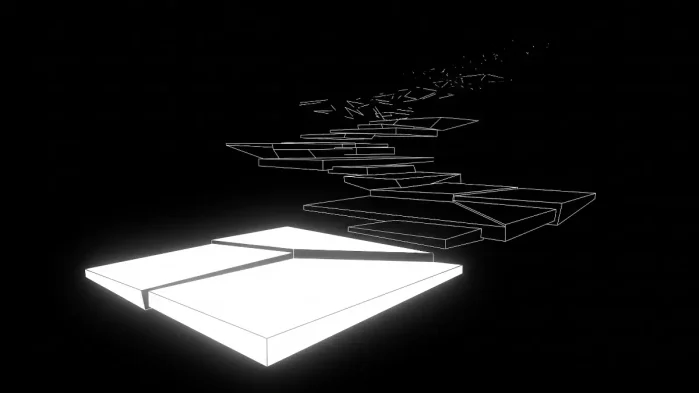
You cannot see the top of the staircase from the bottom. You cannot plan step forty-seven because step forty-seven doesn’t exist yet. Step forty-six will reveal it.
Your only job is to identify the next step, the one you can actually take, and take it. Each step must be achievable on its own. Each step must pay for the next one, either financially, through learning, or through reputation. You climb one earned step at a time.
The long-term plan tries to skip the staircase. It tries to teleport you to the top by describing the top in enough detail that you feel like you’ve already arrived.
But describing the top is not climbing the stairs. And the distance between your fantasy of the top and the executable reality of the next step is where most entrepreneurs waste years of their lives.
They are, as I remind myself whenever I catch myself planning instead of building, just curating a museum of good ideas that never left the hard drive.

That’s when it becomes uncomfortable.
So much of what we refer to as “strategic planning” is actually procrastination dressed up as planning. We engage in planning because it seems like work, since it results in tangible outputs, fills up our calendars, and provides us with something to show for the day.
But if you run the “So What?” test on most plans, they collapse.
The So What? test is straightforward. For each point in your plan you should ask yourself: so what? What changes as a result of this? What ships? Who gets it? And what potential energy does this turn into kinetic output?
If you respond with “nothing yet, but it will inform future planning,” then you are delaying. You’re on the Treadmill, working hard with no progress at all, and the most unpleasant aspect is that you feel busy. The Busyness Paradox is clearly at work here: a high level of busyness coupled with low output. This is the most hazardous quadrant since it seems completely like work.
Planning has its place, though it’s a minor one. You need a certain amount of planning to enable you to identify the next step and a corresponding amount of strategy to know approximately in which direction the staircase is heading. However, any hour spent further refining a plan that reality has not tested is an hour of potential energy which remains stored, loses its density, and never turns into anything real.
Business Potential Energy only matters when it converts. A business idea, standing alone in the lobby of a bank, is worth nothing.
You cannot pay your mortgage with a concept. You cannot scale a thought. The energy only becomes valuable when it is transformed into output, when something real lands in someone else’s hands.
That is what shipping value means. And shipping requires you to stop planning and start building.
The way to get started is to quit talking and begin doing.
Walt Disney
So what do you do instead? You stop trying to design the whole staircase. You start climbing.
Here are four concrete steps I use, and they have yet to fail me.
1. Kill the 5-Year Plan. Replace It With a 90-Day Priority.
One vision. One vector. One staircase step.
Instead of projecting five years into a future you cannot see, ask yourself: what is the one thing I can complete in the next ninety days that, if I finish it, will force the next step to reveal itself?
This is the executable reality test. The 90-day priority must be specific enough that you know when it is done. It must be achievable with the resources you have right now, not the resources you hope to have next year. And it must be something that, once shipped, changes what is possible for you.
If your 90-day priority could be described as “explore” or “research” or “think about,” you are still planning.
Ship something. Write the post. Build the prototype. Send the proposal. Make the call. Convert potential energy into output.
2. Run the “So What?” Test on Every Planned Item
Take your current plan, your current roadmap, your current list of strategic priorities. Go through each item. Ask: so what?
What changes because this exists? Who receives something? What becomes possible that wasn’t possible before?
If the answer is vague, the item is fantasy. Cut it.
If the answer is “this informs future planning,” the item is procrastination. Cut it.
If the answer is concrete and specific and involves another human being receiving something of value, keep it. Everything else is decoration.
This test is brutal because it reveals how much of what we call strategy is actually comfort.
We keep items on the plan because removing them would mean we have less to point at, less to show for our planning session. But the point of strategy is to identify the next staircase step and take it. The point is never to fill a document.
3. Ship Before You Are Ready
The staircase isn’t based on a blueprint; it begins with a shipment.
To me, a shipment is a single item of output that has substance. It is one instance in which potential energy has been converted into something tangible that has come into the hands of another person. For example, a blog post that has been read. A prototype that has been tested. A proposal that has been evaluated. A product that has been purchased.
Each shipment gives you knowledge that the plan never could. The market reacts or it doesn’t react. People take part or they don’t. You find out what has an effect and what doesn’t, and that knowledge becomes the information on which your next move is based.
You cannot get this information from planning. And you can only get it from shipping.
Mortality is the urgency here. I don’t say that to be dramatic. I say it because it is the one variable you cannot control and cannot negotiate with.
You do not know how many steps you have on this staircase. The only one you can stand on is this one. The only shipment that matters is the next one.
Every day you spend planning instead of shipping is a day you will never get back, spent on a document that will likely be obsolete within a quarter.
4. Let the Market Pick Your Next Step
This is the step which seems most contrary to expectation, particularly for those who are involved in planning.
Rather than working out what the next step should be, you should ship the current step and then see what the world does with it. The path that emerges is a kind of conversation between your output and the signal that it produces. Once you have shipped something, people will respond, and their response will tell you which direction to take next.
Sometimes the signal is obvious. A post goes viral. A client asks for more. A feature gets immediate adoption.
Sometimes the signal is subtle. A side comment in an email. A question someone asks that you weren’t expecting. A pattern in what people click on or share or ignore.
Your job as a Value Shipper is to read that signal and let it inform the next step. This is how careers emerge.
You are following the energy. You are following the signal that your shipped work produces, and that signal is more accurate than any forecast you could have built from your desk.
Sun Tzu wrote in The Art of War that strategy should be fluid, like water. Water shapes its course according to the nature of the ground.
The entrepreneur who clings to a rigid plan is like water trying to flow uphill because the map said there should be a hill there. The entrepreneur who follows the signal adapts to the terrain and finds a path the map never imagined.
Let me come back to where we started.
The long-term plan feels safe because it pretends to know the future. But the future is the one thing no plan has ever successfully predicted.
What you can predict, with reasonable confidence, is this: if you ship the next step, the step after it will become visible. And if you ship that one too, the one after that will appear.
The staircase builds itself, one step at a time, but only if you are walking up it.
All you need is to set a priority for the first 90 days and have the self-control to carry it out before you feel ready.
To carry out the “So What?” test on your own work you need honesty and the courage to remove anything that fails the test. You have to believe that the right path will become clear as a result of taking action, as a result of shipping, and as a result of the response you get when you put something genuine into the world.
The true risk is the safe path, while the comfort blanket represents the danger, since each month you spend refining the plan is a month you could have spent actually building the thing.
Don’t plan for a future that you can’t see.
Begin by climbing the staircase which is directly in front of you. The only step that is important is the one that follows.
Take it.